Bathroom Safety Equipment That Can Support Independence at Home
For many people wishing to maintain independence, the bathroom can present unique challenges. Slippery surfaces, tight spaces, and the need to complete personal tasks safely can increase the risk of falls or injuries, regardless of age or medical history. Understanding your options for bathroom safety equipment is the first step in creating a more accessible home environment. This guide from Get DME Now explores commonly recommended bathroom safety solutions and provides practical advice on choosing, using, and maintaining the right equipment for your needs.
Why Is Bathroom Safety So Important?
The bathroom is one of the most common locations for household falls and injuries, especially for people managing mobility limitations, balance changes, or chronic conditions. A safe bathroom setup can mean the difference between ongoing independence and increased reliance on caregivers. By adding appropriate equipment, the bathroom can become a place where daily routines are completed safely and comfortably.
Common Bathroom Hazards
- Slippery wet floors
- Stepping in and out of tubs or showers
- Low toilet height
- Lack of stable handholds near the toilet or bathing area
- Tight turning space for assistive devices (walkers, wheelchairs)
- Poor lighting
Types of Bathroom Safety Equipment
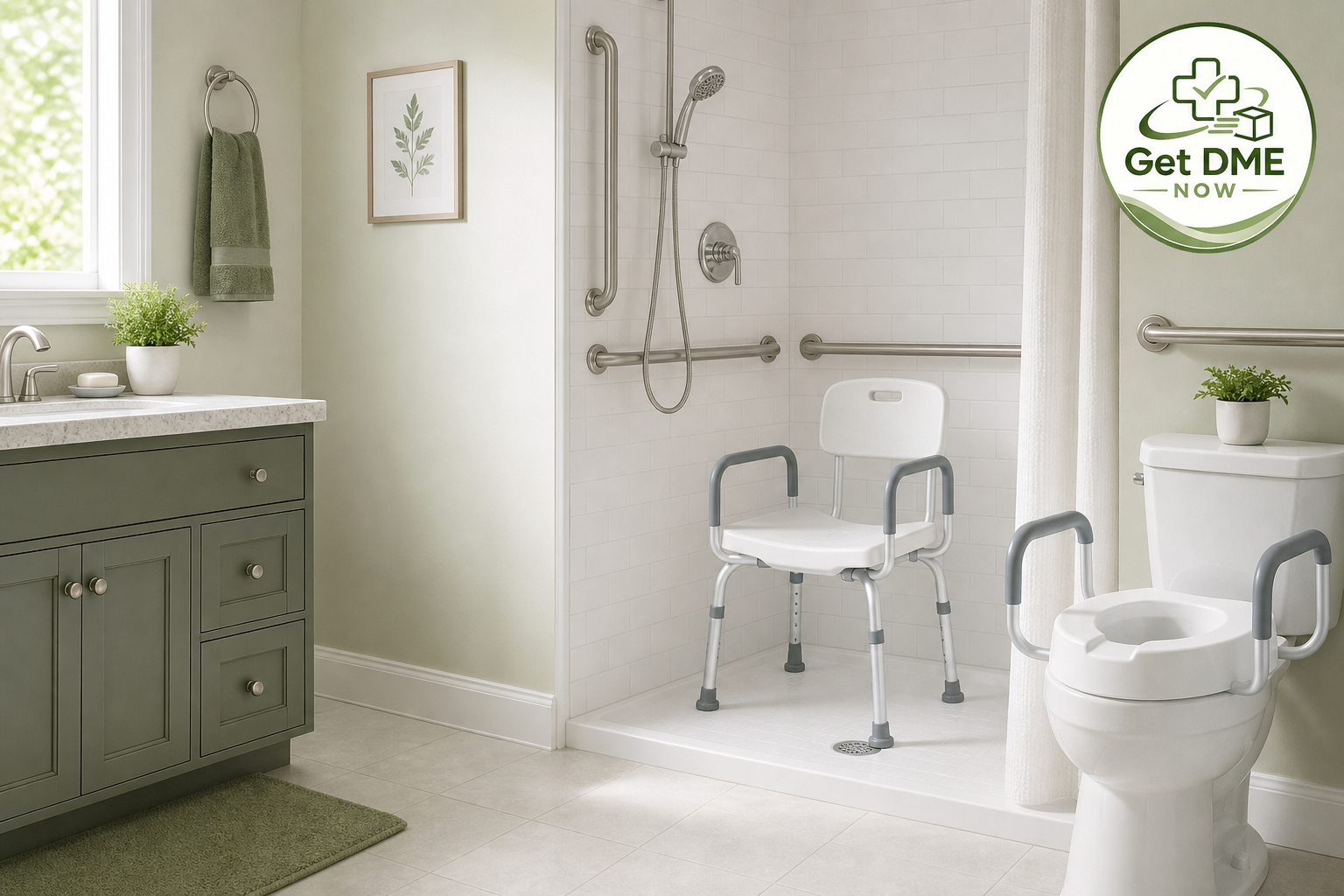
Not every home or person will need the same solutions. However, there is a wide range of equipment available that may support safer, more independent living at home. At Get DME Now, we help you learn about, access, and understand these equipment options based on your home and health needs.
Grab Bars
What They Are: Sturdy bars, usually made of metal, installed on walls near toilets, showers, or bathtubs.
How They Help:
- Provide balance support when standing, sitting, or moving
- Offer a steady handhold during transfers
- May boost confidence in completing bathroom tasks independently
Where to Install:
- Inside and outside the shower or tub
- Next to the toilet
- Along the bathroom wall for general support
Questions to Ask:
- What is the best position for installation?
- Is professional installation needed?
- Which grip style feels safest?
Raised Toilet Seats
What They Are: Special attachments that elevate the height of the toilet seat, typically by 2–6 inches.
How They Help:
- Reduce the effort needed to sit down and stand up
- May lessen the risk of falls for people with limited leg strength or balance
Features to Consider:
- Fixed vs. removable
- With or without handles
- Weight capacity and fit with your current toilet
Shower Chairs and Benches
What They Are: Portable, stable chairs or benches designed for use inside a bathtub or shower stall.
How They Help:
- Provide a secure place to sit while bathing
- Can reduce fatigue, lowering the risk of slips
- Are available in padded and non-padded versions, with or without backrests
Types:
- Stationary shower chairs
- Transfer benches (half inside, half outside the tub for safer entry/exit)
- Foldable or wall-mounted options
Non-Slip Mats and Flooring
What They Are: Rubber or silicone mats, adhesive strips, and specialty flooring designed to increase traction on wet surfaces.
How They Help:
- Prevent feet from slipping inside showers, tubs, and in front of sinks
- Help reduce the likelihood of accidental tumbles on wet tiles
Handheld Showerheads
What They Are: Flexible shower hoses with spray heads that can be detached and held in the hand.
How They Help:
- Allow for bathing while seated
- Help control water spray direction and reach
- May make independent bathing more comfortable and thorough
Determining Which Equipment May Be Right for You
Not all products are suitable for every need or bathroom layout. Start with honest conversations—both with your healthcare provider and with those who use the bathroom every day.
Factors to Consider
- Mobility level: Do you use a walker or wheelchair?
- Strength and balance: Are you at risk for falls or fatigue when standing?
- Bathroom size: Will the equipment fit safely?
- Personal preferences: What features (handles, padding, adjustability) help you feel most secure?
- Home modifications: Are you able to make permanent changes to the bathroom?
Discuss these details with your provider and the experienced support team at Get DME Now, who can help answer equipment questions and explore coverage options.
Getting Bathroom Safety Equipment Through Insurance
Some bathroom safety equipment may be considered durable medical equipment (DME) and may be covered through insurance, depending on individual medical necessity and eligibility. However, not all items are universally covered, so it’s important to:
- Ask your healthcare provider for a prescription or recommendation if needed
- Understand your insurance plan’s requirements, including documentation
- Check with Get DME Now for guidance on the most up-to-date eligibility standards
Coverage may depend on:
- Diagnosed condition or demonstrated mobility/balance issues
- Healthcare provider’s justification of need
- Type of insurance plan
- Medical documentation and assessments
Visit 🌐 getdmenow.com for detailed support on what equipment may be covered, and how to navigate the process from recommendation to delivery.
Installing and Using Bathroom Safety Equipment Safely
Proper installation and use are just as important as choosing the right product. Unsafe installation or misuse can defeat the equipment’s purpose.
Grab Bars
- Securely anchor into wall studs, not just drywall
- Avoid towel racks as substitutes—they are not designed to support body weight
- Test for sturdiness before regular use
Raised Toilet Seats
- Make sure the seat is properly locked in place before sitting or standing
- Handles, if present, should be tight and stable
- Regularly inspect for wear or loose fittings
Shower Chairs and Benches
- Place on a level surface
- If using in a tub, ensure fit and stability
- Keep rubber tips or feet debris-free for maximum grip
Non-Slip Mats
- Lay mats flat with no curled corners
- Regularly clean and dry after use
- Replace if suction or grip fails
Handheld Showerheads
- Confirm the hose reaches comfortably to your seat
- Replace if leaks, blockages, or cracks appear
Cleaning and Maintaining Safety Equipment
Proper care extends the life of your equipment and helps maintain safety.
General Tips
- Clean equipment regularly with mild cleansers recommended by the manufacturer
- Dry thoroughly after use to prevent mold and mildew
- Check for rust on metal parts or cracks in plastics/removable cushions
- Replace equipment that shows excessive wear, damage, or instability
Questions to Ask Before Choosing Bathroom Safety Equipment
Having a list of questions before you shop or consult with your provider helps ensure the best fit and function:
- Is this equipment compatible with my bathroom setup?
- What features provide the most comfort and security?
- How is it installed and who will install it?
- What ongoing maintenance is required?
- Is this equipment covered through my insurance plan?
- Do I need documentation from my healthcare provider?
Common Misunderstandings About Bathroom Safety Equipment
- Grab bars and towel racks are not the same. Only properly rated and installed grab bars are recommended for support.
- Raised toilet seats are not all one size. Check measurements, weight capacities, and compatibility.
- Non-slip mats can wear out or lose traction. Inspect and replace as needed.
- Some equipment requires prescriptions for insurance coverage. Coverage policies and medical necessity standards vary.
How Get DME Now Can Help
Get DME Now is committed to making the process of selecting, ordering, and receiving bathroom safety equipment understandable and accessible. Our knowledgeable team can:
- Provide information about equipment options
- Help you check insurance eligibility, where applicable
- Work with your healthcare provider to gather needed documentation
- Walk you through product features, usage, and care
- Assist with the ordering and delivery process
Learn more or begin your journey to a safer home environment at 🌐 getdmenow.com.
Conclusion: Supporting Independence with the Right Tools
Bathroom safety equipment can be an essential part of living confidently and independently at home. Whether you’re managing changes in mobility, recovering from an injury, or simply hoping to reduce everyday risks, these tools are designed to provide support where it matters most.
Choosing durable medical equipment is a personal process that may involve your healthcare provider, insurance plan, medical documentation, and individual needs. Get DME Now helps make the process easier to understand by providing helpful information and assistance with eligible equipment options. To learn more, visit 🌐 getdmenow.com.