A Beginner’s Guide to Mobility Aids and Wheelchair Equipment
Mobility aids and wheelchair equipment offer important support for individuals who need assistance moving safely and comfortably in their daily lives. Whether due to an injury, a chronic health condition, or simply a need for extra stability, the world of mobility devices can seem overwhelming at first. This beginner’s guide will walk you through the basics—types of aids, key features, how to choose, and tips for working with your healthcare provider. Get DME Now is dedicated to helping you navigate your options smoothly and responsibly.
What Are Mobility Aids?
Mobility aids are devices designed to help people who have difficulty walking or moving from place to place. They can provide support, improve stability, and allow for increased independence. Mobility aids range from simple canes to advanced powered wheelchairs.
Common Types of Mobility Aids
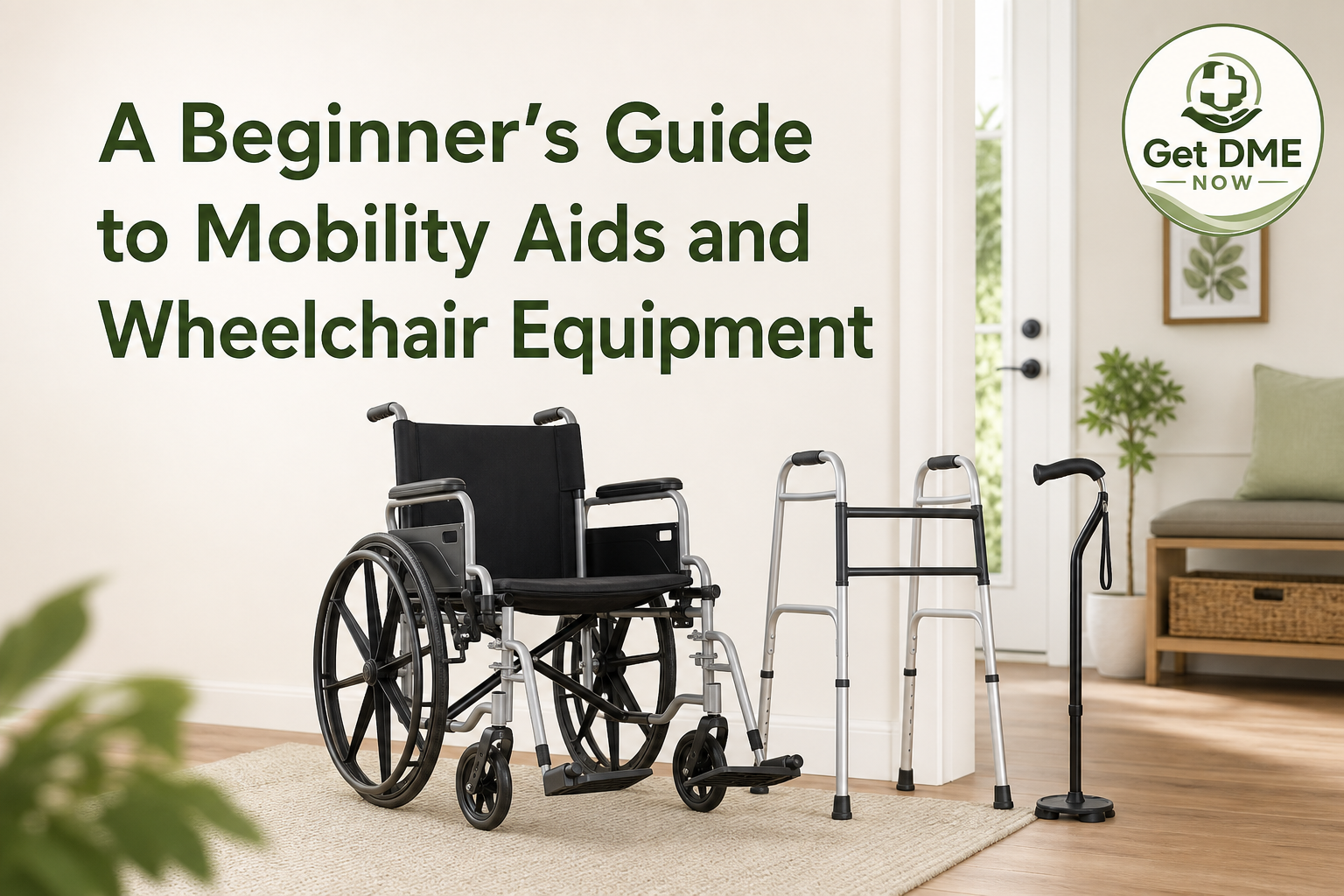
- Canes: Offer balance support for those who only need a little assistance.
- Crutches: Help redistribute weight from the legs to the upper body, commonly used for short-term injuries.
- Walkers: Provide more comprehensive support and are available with or without wheels.
- Rollators: Walkers with wheels and often a built-in seat, designed for people who need a bit of rest as they move.
- Wheelchairs: Manual or powered devices for people who cannot walk or prefer not to walk long distances.
Each type is designed with specific needs in mind and can be a crucial part of an individual’s care plan.
Understanding Wheelchair Equipment
Wheelchairs may be appropriate for people with many different mobility challenges. Selecting the right wheelchair or accessory depends on individual requirements and the recommendation of a healthcare provider.
Types of Wheelchairs
- Manual Wheelchairs: Propelled by the user or a caregiver, suitable for those with upper body strength and/or assistance.
- Transport Chairs: Lightweight chairs pushed by a caregiver, ideal for short-term transportation.
- Powered Wheelchairs: Operated using a joystick or other control system, helpful for those who may not have the strength or endurance for manual movement.
Wheelchair Accessories and Upgrades
- Cushions: Improve comfort and help reduce pressure.
- Positioning Aids: Help maintain a stable, comfortable posture in the chair.
- Elevating Leg Rests: Can offer greater comfort and support circulation.
- Anti-Tip Devices: Improve safety, especially for those new to wheelchair use.
Consulting with a knowledgeable provider like Get DME Now can make a significant difference in finding a suitable wheelchair and essential accessories.
Who May Benefit From Mobility Aids and Wheelchairs?
Mobility aids and wheelchairs may help a wide range of people, including those who:
- Are recovering from surgery, injury, or illness
- Experience chronic joint or muscular issues
- Have neurological conditions that affect movement
- Have balance, endurance, or stability concerns
- Are living with limb loss or amputation
It's important to consider both physical and lifestyle needs when exploring mobility options—what works for one person may not be optimal for another.
Factors to Consider When Choosing Mobility Equipment
Selecting the right mobility aid or wheelchair involves understanding several key factors. Here’s what you might discuss with your healthcare provider and Get DME Now:
Medical Needs
- What is the primary reason for the equipment—mobility, stability, or post-surgical support?
- Does the equipment need to accommodate special seating or positioning?
Environment
- Will the aid be used primarily indoors, outdoors, or both?
- Are there stairs, uneven terrain, or tight spaces to consider?
Personal Preference
- How much independence does the user want or need?
- Is the equipment easy to use, adjust, and maintain?
Transportation and Portability
- Does the device need to fit in a car or public transit?
- Are lightweight or foldable options necessary?
Insurance Coverage
- What documentation, such as prescriptions or assessments, might be required?
- Does the insurance plan have preferred brands or specific requirements?
Get DME Now can help answer questions about eligible products, insurance, and the documentation process. Visit 🌐 getdmenow.com to learn more or begin an eligibility check.
The Process: From Prescription to Equipment Delivery
Acquiring mobility aids or wheelchairs usually involves several steps:
-
Assessment by a Healthcare Provider
- A physician or therapist evaluates mobility needs and recommends appropriate equipment.
-
Prescription and Documentation
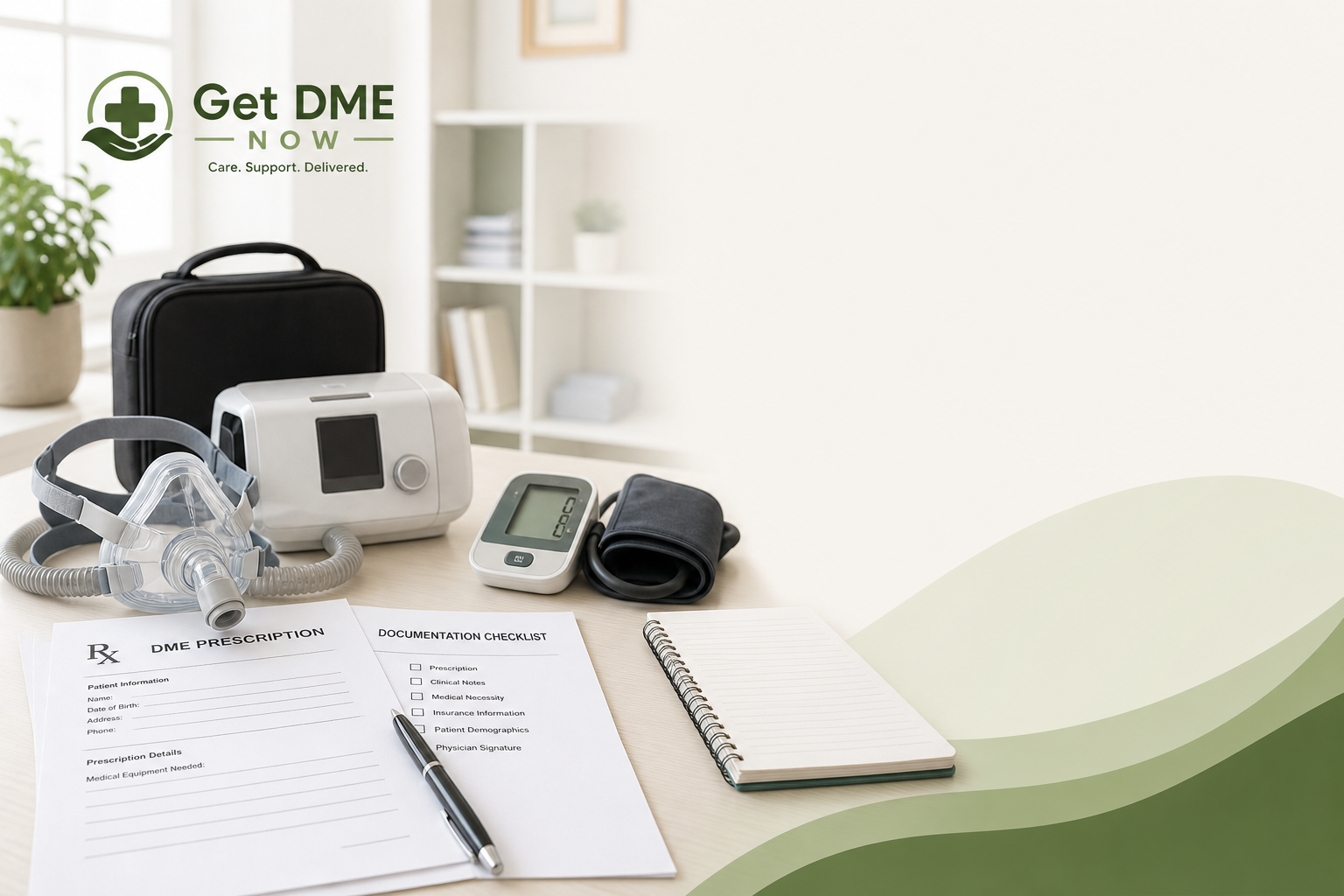
- Documentation by a healthcare provider may be needed for insurance purposes unless paying out-of-pocket.
-
Equipment Selection
- Based on the provider’s recommendations, a DME supplier like Get DME Now presents suitable product options.
-
Insurance Eligibility Check
- The supplier checks your plan’s requirements, which may include prior authorization, documentation, or medical necessity forms.
-
Delivery and Fitting
- The equipment is delivered and adjusted for a proper fit. Some complex chairs may require additional fitting or training for safe use.
-
Follow-up
- It’s important to schedule follow-up visits to address comfort, adjustments, or repairs as needed.
Tips for Using and Maintaining Mobility Equipment
Proper use and maintenance help ensure mobility aids and wheelchairs remain safe and effective.
General Equipment Care
- Clean devices regularly with recommended solutions.
- Check wheels, brakes, and supports for signs of wear.
- Store equipment in a dry, indoor location to protect from the elements.
Battery-Powered Equipment
- Follow manufacturer guidelines for charging and battery storage.
- Keep chargers and cables organized and in working order.
Periodic Review
- Reassess needs with your healthcare provider as conditions or abilities change.
- Upgrade, repair, or replace parts as necessary to maintain safety and comfort.
Common Questions About Mobility Aids and Wheelchairs
Will my insurance cover mobility aids or wheelchairs?
Coverage varies by insurance plan, documentation, and medical necessity. A prescription may be required. Get DME Now helps review eligibility with your insurance provider.
How do I know which type of aid is right for me?
Your healthcare provider can help determine the most supportive device based on your mobility needs, daily routine, and home environment.
Can I travel with my wheelchair or mobility aid?
Many devices are designed for travel and portability. Ask your provider about lightweight, folding, or transport-friendly options.
What should I do if my device needs repairs?
Routine checks and contacting your supplier if any part malfunctions are important. Depending on your insurance plan, certain repairs or replacements may be covered.
Is special training required to use a mobility aid or wheelchair?
Some people benefit from guidance by a therapist, especially for powered equipment or more complex mobility needs.
Questions to Ask Your Healthcare Provider
- What type of mobility aid is best for my situation?
- What kind of training or therapy would help me learn to use it safely?
- Are there any potential risks, such as falls or pressure sores, that I should watch for?
- How should I care for and maintain my equipment?
- What insurance documentation will I need?
Get DME Now can collaborate with your healthcare provider and insurance to help you access recommended medical equipment. Visit 🌐 getdmenow.com for more details.
Conclusion: Taking the First Steps Toward Greater Mobility
Mobility aids and wheelchair equipment can be a valuable part of living more independently and safely. With so many options available, choosing the right product requires careful consideration, the expertise of your healthcare provider, and support from an experienced supplier. Every situation is unique; equipment recommendations and insurance coverage may vary based on individual needs and plans.
Choosing durable medical equipment is a personal process that may involve your healthcare provider, insurance plan, medical documentation, and individual needs. Get DME Now helps make the process easier to understand by providing helpful information and assistance with eligible equipment options. To learn more, visit 🌐 getdmenow.com.
Author: Get DME Now Category: Diabetes Education