How to Clean, Store, and Care for Durable Medical Equipment
Durable Medical Equipment (DME) provides ongoing support for daily health needs, comfort, and overall safety at home. Whether it’s a blood glucose monitor, a mobility aid, a back brace, or bathroom safety equipment, these devices play an essential role in many people’s lives. However, to keep DME functioning well and serving its intended purpose, it’s important to clean, store, and care for it properly. This guide, provided by Get DME Now, offers clear, practical steps to help you protect your equipment—and your peace of mind.
Understanding the Importance of DME Care
Durable Medical Equipment is designed for repeated use and long-term support, but like any tool, it needs consistent attention. Proper care can help equipment:
- Maintain its accuracy and function
- Last longer with fewer repairs or replacements
- Support a safe and sanitary home environment
- Reduce risks of infection or skin irritation
- Meet manufacturer and insurance guidelines
Neglecting care may allow buildup of dust, bacteria, mold, or other contaminants, affecting both your device and your health.
Getting Started: What Does "Proper Care" Mean?
"Proper care" includes regular cleaning, correct storage, safe handling, and routine inspection of your equipment. However, different types of DME require different care procedures, so always consult the manufacturer's instructions or your healthcare provider for device-specific recommendations.
Common Types of Durable Medical Equipment
Some examples of DME that may require special attention:
- Blood glucose monitoring systems and CGMs
- Mobility devices (wheelchairs, walkers, canes)
- Braces and orthopedic supports
- Compression therapy equipment
- Blood pressure monitors
- Bathroom safety bars and shower seats
- Respiratory equipment
Each device may have unique cleaning and storage needs, but there are foundational practices that apply broadly.
Cleaning Durable Medical Equipment
General Cleaning Guidelines
- Follow the Instructions: Always start with the cleaning recommendations provided by the manufacturer and your care team.
- Use Safe Products: Avoid harsh chemicals unless explicitly approved. Mild soap and water are often best for many surfaces.
- Frequency: Clean according to use—some items (like glucose meters) may need daily cleaning, while others (such as wheelchairs) might require weekly or spot cleaning.
Step-by-Step: Cleaning Common DME
Blood Glucose Meters & CGMs
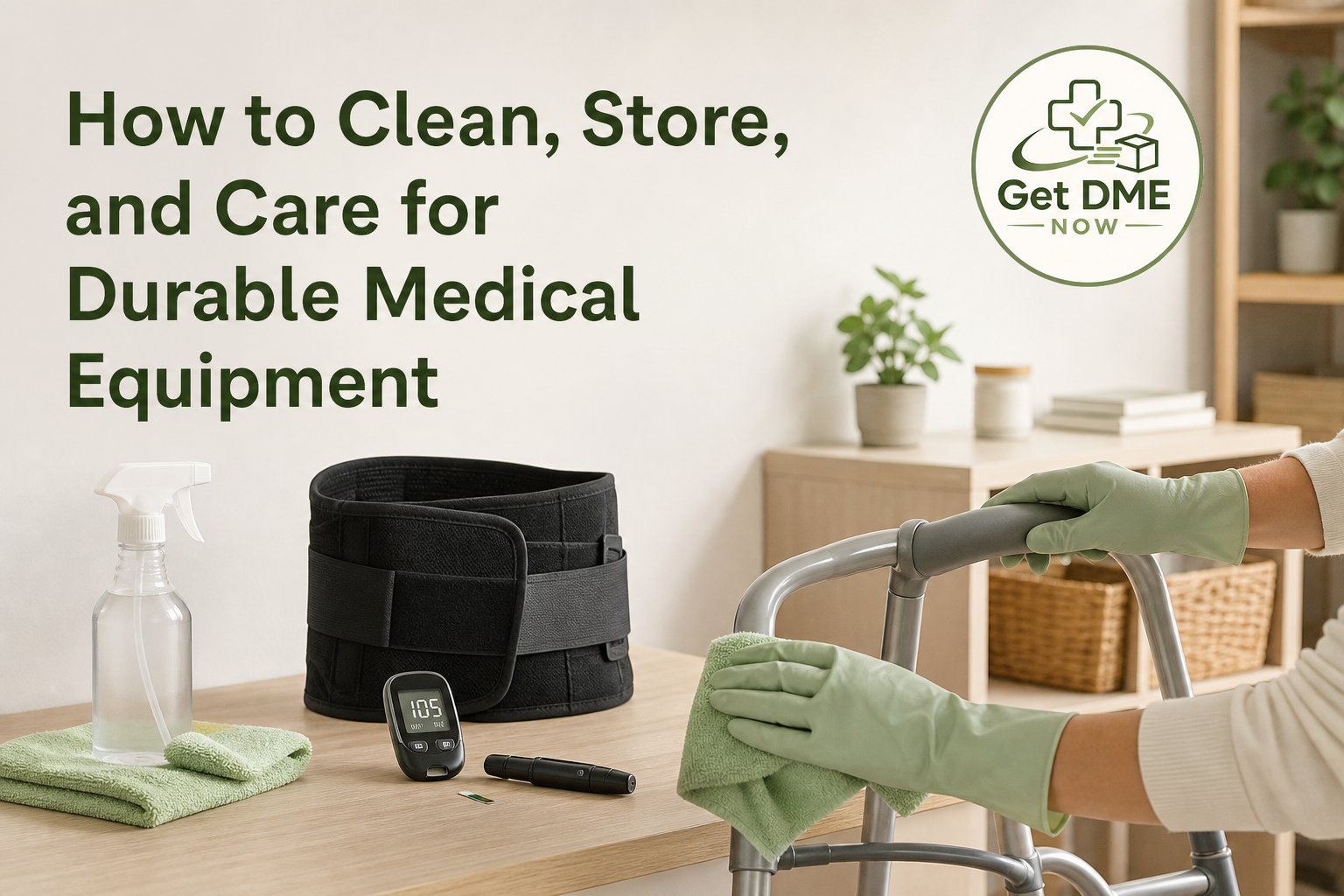
- Wipe the exterior with a clean, damp cloth and mild soap; do not immerse in water.
- Avoid getting liquids in ports or battery compartments.
- Alcohol wipes may be used for disinfecting when manufacturer approved.
- Replace lancets, test strips, and sensors as directed.
Mobility Devices (Wheelchairs, Walkers)
- Clean frame and handles with soapy water, then dry with a towel.
- Sanitize frequently touched surfaces more often—especially if used outside or by multiple people.
- Check wheels and moving parts for debris or signs of wear.
Orthopedic Braces
- Remove liners or fabric covers if possible and wash according to instructions.
- Clean hard surfaces with a damp cloth and mild soap.
- Allow all parts to air dry completely before reassembling or wearing.
Compression Equipment
- Hand wash sleeves or socks with mild detergent and cool water.
- Lay flat or hang to dry, keeping away from direct sunlight or heat.
Bathroom Safety Equipment
- Wipe down grab bars, shower seats, and mats regularly to prevent mold, soap scum, or bacteria.
- Dry after each use to minimize slipping hazards and keep hardware rust-free.
Blood Pressure Monitors
- Wipe the cuff and device exterior with a soft, slightly damp cloth.
- Never submerge the monitor in water.
- Store cuff neatly to avoid unnecessary creasing or stress on the material.
Items to Avoid During Cleaning
- Avoid bleach or abrasive scrubbing pads, as these can damage equipment.
- Never use sprays or liquids inside electronic components.
- Do not use cleaning solutions not specifically recommended by the product instructions.
Proper Storage of Durable Medical Equipment
How you store DME is nearly as important as how you clean it. Incorrect storage may lead to:
- Bacterial or mold growth
- Malfunctioning parts
- Rust, cracks, or warping
- Increased allergens in the home
Storage Best Practices
- Dry Completely: After cleaning, ensure items are fully dry before putting them away.
- Temperature Control: Store devices in a dry, room-temperature area away from direct sunlight or extreme cold/heat.
- Avoid Humidity: Keep equipment out of damp bathrooms or basements when possible.
- Organized Placement: Store in a designated, tidy location that is easy to reach but not prone to accidents.
- Protect From Dust: Use covers or cases provided with the equipment, or a clean towel for extra protection.
Special Storage Tips
- Medical supplies such as test strips, glucose sensors, or medication should be kept in their original containers with clear labeling and expiration dates visible.
- Store batteries in a separate, dry location and check device power levels regularly.
- Keep hygiene supplies—such as hand sanitizer or disinfecting wipes—nearby for regular maintenance.
Handling and Routine Maintenance
Gentle and Safe Use
- Follow device use instructions to avoid unnecessary wear.
- Do not force parts to move if there is resistance; check for obstructions or consult a technician.
- Regularly inspect for damage: look for cracks, frayed wires, or missing pieces.
Scheduled Inspections
- Many items benefit from a periodic check—weekly, monthly, or as recommended.
- Make sure moving parts work smoothly and all fasteners are secure.
- For battery-operated or electronic devices, replace batteries as directed and keep spare batteries on hand.
When to Contact a Professional
- If you notice broken pieces, battery failures, inconsistent readings, or unexplained device alarms, contact the equipment provider or a qualified service technician.
- Never attempt to repair electrical or structural parts unless specifically trained and the manufacturer approves self-servicing.
Preventing Common Equipment Issues
Avoid Cross-Contamination
- Never share personal equipment without proper cleaning and consult your healthcare provider before doing so.
- Use single-use disposable items as intended.
- Label personal equipment if multiple users are present in the household.
Special Safety Tips
- Always wash your hands before handling any DME, especially when it involves direct skin or wound contact.
- Make sure mobility devices are free of obstacles and have a clear path when stored or transported.
- Secure cords and hoses to prevent tripping or tangling.
Caring for Equipment During Travel or Moves
When traveling or moving:
- Pack devices securely in padded bags or their provided cases.
- Bring extra charging cords, batteries, or backup supplies.
- Carry cleaning and hygiene supplies, especially on longer trips.
- Plan ahead for storage at your destination, choosing areas that match your home routines.
If you ever have questions about transporting specific equipment, consult your provider or the team at Get DME Now before your journey.
Frequently Asked Questions About DME Care
How often should I clean my medical equipment?
This depends on the device, its usage, and manufacturer recommendations. For example, glucose meters may require a wipe-down after each use, while braces might need cleaning every few days.
Can I use any disinfectant on my DME?
Not all disinfectants are safe for use on every device. Always follow manufacturer instructions. If you’re unsure, ask your healthcare provider or the Get DME Now support team.
What should I do with old or damaged equipment?
Do not attempt to repair or reuse damaged equipment without professional advice. Some items may be safely recycled or disposed of per local guidelines, while others require special handling. Your DME supplier or local authorities can provide more information.
When to Seek Additional Support
Your healthcare provider is the best source for advice about which equipment is appropriate, how to use it properly, and when to seek service or replacement. In addition, reliable support teams such as Get DME Now can help answer questions about ongoing equipment care.
For extra tips and detailed guides, visit 🌐 getdmenow.com.
Conclusion: Everyday Equipment Care Makes a Difference
Caring for your durable medical equipment is an important part of supporting your health and independence. Regular cleaning, correct storage, and gentle handling can help ensure your devices work well for as long as possible. Every piece of equipment is unique, so remember to check manufacturer guidelines and ask your healthcare provider when in doubt.
Choosing durable medical equipment is a personal process that may involve your healthcare provider, insurance plan, medical documentation, and individual needs. Get DME Now helps make the process easier to understand by providing helpful information and assistance with eligible equipment options. To learn more, visit 🌐 getdmenow.com.
Author: Get DME Now
Category: Diabetes Education