Traveling Across Time Zones While Using Continuous Glucose Monitoring
Travel can be one of life’s great pleasures, but for people who use a continuous glucose monitor (CGM), crossing time zones brings unique considerations. Maintaining stable blood glucose during travel can be challenging—even more so when your device relies on accurate timing and regular calibration. Fortunately, with preparation and responsible planning, CGMs can help provide valuable information to support safe and enjoyable trips. In this article, we’ll discuss essential practical steps, helpful tips, and how Get DME Now can assist you as you journey with your CGM.
Understanding Continuous Glucose Monitoring and Time Zone Challenges
Continuous glucose monitoring devices are designed to provide near real-time glucose readings, alarms, and trends throughout the day and night. Most CGMs record data based on the time set on their receiver, smartphone, or compatible system. When you cross time zones, your device may need updates to ensure glucose readings, logging, and alerts remain consistent with your new location.
Why Does Time Matter for CGMs?
- Calibration schedules: Some CGMs require scheduled calibrations or sensor changes based on the device clock.
- Alarm timing: Glucose alerts and medication reminders are time-dependent.
- Data interpretation: Glucose trends and reports are easier to interpret when log times match your local time.
- Syncing with health records: Accurate timestamps support better communication with your healthcare provider.
Key Preparation Steps Before Traveling
Good preparation is the foundation of successful travel with any diabetes technology. Here’s how you may get ready to cross time zones confidently:
1. Review Your Device Settings
- Check your CGM system’s manual or user guide for instructions about changing time zones.
- Many systems allow manual time adjustments; some may sync automatically with your smartphone.
- Identify which settings could affect your scheduled alerts, calibration reminders, and data logs.
2. Pack Extra Supplies
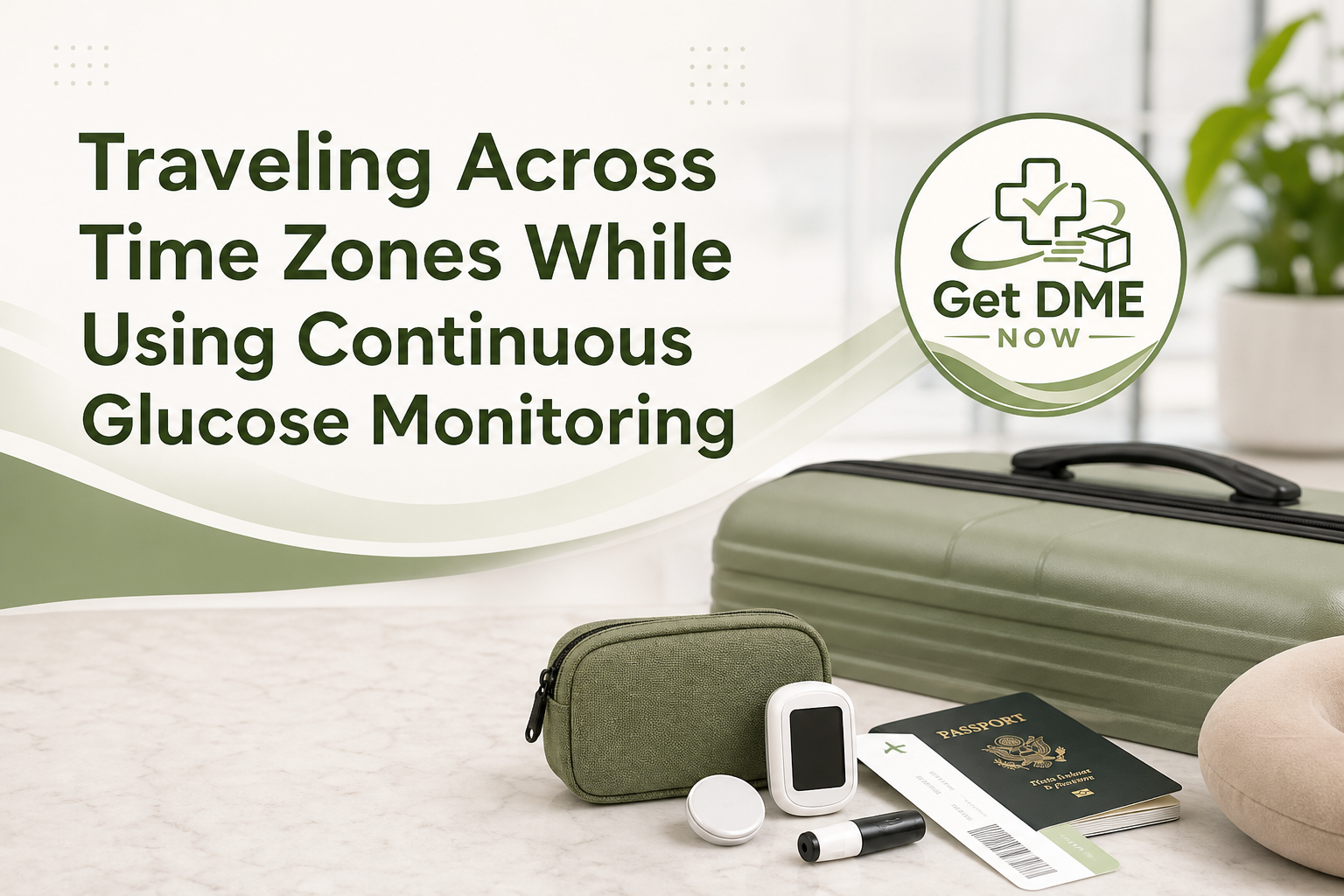
- Bring more supplies than you think you’ll need: extra sensors, transmitters, adhesive patches, chargers, and batteries.
- Pack a printed copy or digital download of your device’s user guide.
- Carry backup blood glucose monitoring supplies in case your CGM is temporarily unavailable.
3. Plan for Airport Security and International Travel
- CGMs are generally safe for air travel, but security scanners can sometimes interfere with electronic equipment. Consult your manufacturer’s recommendations and bring a device ID card or physician note explaining your equipment if needed.
- If traveling internationally, learn about local time standards and differences in medication availability.
Adjusting CGM Settings After Arrival
Crossing into a new time zone doesn’t require complicated steps, but you should ensure your CGM remains current.
Updating Device Clocks
- Update your device clock as soon as you arrive at your destination, if it doesn’t adjust automatically.
- Confirm that scheduled alarms and sensor change reminders reflect local time.
Syncing With Mobile Devices
- If your CGM uses a smartphone or tablet app, update the device’s time zone through system settings.
- Double-check that the CGM app is displaying the correct current time and syncing properly.
What If There’s a Gap in Data?
- Short lapses after a time change are often okay, but prolonged time inconsistencies can skew historical reports.
- If unsure how to correct timing or logs, consult the device manual or speak with your healthcare provider.
Practical CGM Travel Tips by Scenario
Air Travel
- During flights, in-flight Wi-Fi and airplane mode may impact some smartphone-based CGMs. Most devices will continue recording even if they lose network connection, but review your device’s recommendations.
- Keep your receiver or smartphone charged and close at hand, especially on longer flights.
Overnight or Long-Haul Journeys
- Interrupted sleep and meal schedules can impact glucose control. Use your CGM’s trend display and alarms.
- Set reminders for sensor changes based on local time once you arrive.
International and Extended Travel
- Bring more sensors, adhesive patches, and backup supplies than you think you’ll use.
- Consider environmental differences (heat, humidity, sweating, swimming) that may affect sensor adhesion or device performance.
Questions to Ask Your Healthcare Provider Before Travel
Talking with your healthcare provider or diabetes care team before a trip can be valuable. Here are helpful questions:
- Should I adjust my basal insulin or other medications when crossing multiple time zones?
- How should I update my CGM’s time or alarm settings for my destination?
- What should I do if my CGM malfunctions far from home?
- Can I get an extra supply of sensors or a backup monitor for my trip?
How Insurance and CGM Supplies Work When Traveling
Coverage for Traveling With CGMs
Insurance plans often cover supplies for continuous glucose monitors when medically necessary and prescribed. However, it’s a good idea to:
- Check your supply schedule—some insurance plans may allow an emergency override for extended travel.
- Ensure your durable medical equipment provider, such as Get DME Now, has your destination address if you might need a shipment while away.
- Contact your insurance plan about coverage for out-of-state or international needs. Coverage requirements can vary by plan, state, and destination.
Tips for Smooth Reordering
- Order supplies well in advance of travel whenever possible.
- Clarify how to request additional shipping support.
- Keep important contact numbers and your CGM manufacturer’s support line with you.
Common Misunderstandings About CGMs and Travel
Misconception 1: “My CGM automatically knows the time everywhere.”
Not all continuous glucose monitors will adjust their internal clocks or alarms automatically when you cross time zones. Always check device instructions.
Misconception 2: “I can’t use a CGM at airport security.”
Most CGMs can safely go through airport security and remain operational. If you’re unsure, reference your device manual or present a letter from your healthcare provider.
Misconception 3: “I only need what fits in my carry-on.”
Delays, lost luggage, or extended trips may require extra supply planning. Pack more than you think you need.
Safe Storage and Device Care While Traveling
- Store all sensor supplies in a temperature-controlled, dry space—avoid extreme heat or freezing.
- Carry everything you may need in your personal item or carry-on, so you are never separated from your CGM or supplies during your journey.
- If crossing borders or encountering different climates, use protective carrying cases for sensitive devices and supplies.
Responsible Use: CGMs and Self-Management While Traveling
Traveling can disrupt routines. Here are ways to use your CGM responsively when crossing time zones:
- Use alarms and data to guide safe glucose monitoring—but do not rely on CGM alone to make significant medical or insulin dose changes while away from home. Bring backup testing supplies and contact your healthcare provider with questions.
- If you notice symptoms that do not match your CGM reading, perform a conventional fingerstick measurement for confirmation.
- Know that changes in activity, diet, or sleep, as well as time zone adjustment, may all influence glucose levels. Use trends and alarms as tools for support—not as a guarantee of results.
When to Seek Help While Traveling
- If your CGM malfunctions or becomes separated from you, refer to your backup plan and use conventional glucose testing.
- Seek medical attention if you experience symptoms of high or low blood glucose and are unsure about your readings, especially if unfamiliar with local healthcare systems.
- Reach out to your DME provider, such as Get DME Now, for supply support or information about replacement equipment if needed.
Working With Get DME Now for CGM Supplies and Education
Travel is often more enjoyable with the support of a trusted durable medical equipment supplier. Get DME Now helps make the process easier—whether you are exploring new destinations or preparing for a long trip.
- Our team offers educational resources and assistance with eligible equipment, including preparing for travel with CGM systems.
- We can help verify your supply schedule, coordinate shipping, and provide support for reorders or replacement needs.
- Learn more about how Get DME Now may support your travel plans at getdmenow.com.
Conclusion: Safe and Supported Travel With CGMs
Traveling across time zones while using a continuous glucose monitor is manageable with a little extra preparation and responsible planning. Every journey brings its own set of variables, so it’s important to update your CGM’s time zone settings, bring ample supplies, and communicate with your healthcare provider about medical management before and during your trip. Coverage, device recommendations, and specific travel advice may vary, so always double-check instructions for your particular device.
Choosing durable medical equipment for your lifestyle, including travel, is a personal process that may involve your healthcare provider, insurance plan, and individually tailored documentation. Get DME Now helps you navigate each step by offering reliable information and supportive assistance for CGM options and travel preparations. To learn more about preparing for a trip with CGM, visit 🌐 getdmenow.com.