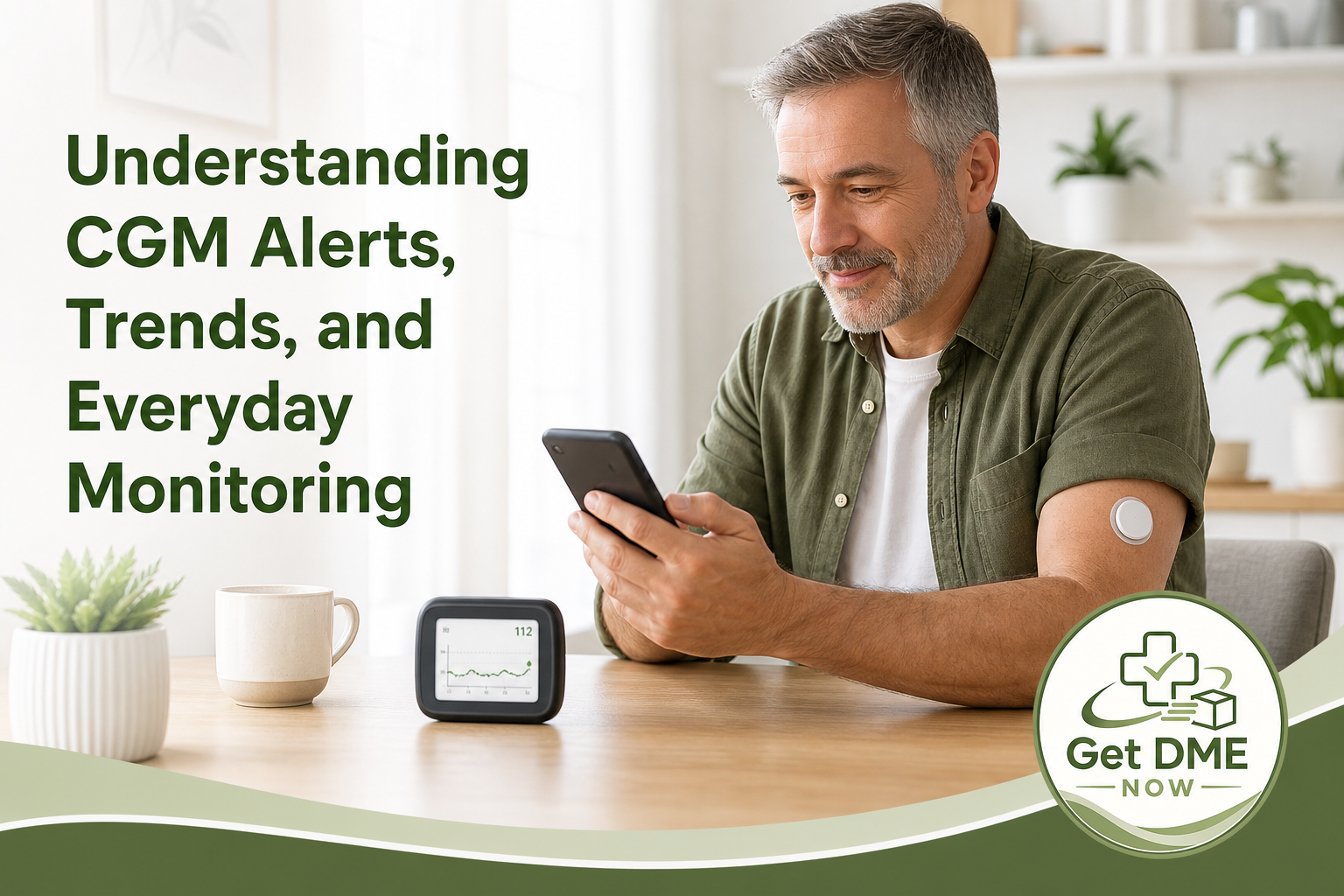
Understanding CGM Alerts, Trends, and Everyday Monitoring
Continuous Glucose Monitoring (CGM) has become a key technology for many people managing diabetes. It provides real-time information about glucose levels, allowing for more informed daily decisions and potential support in preventing sudden highs and lows. However, for those new to CGM—or for caregivers and loved ones—understanding how alerts, glucose trends, and daily monitoring work can feel overwhelming. This guide from Get DME Now will help clarify these features and offer practical insights into everyday CGM use.
What Is Continuous Glucose Monitoring?
Continuous Glucose Monitoring is a technology designed to measure glucose levels throughout the day and night. Unlike traditional fingersticks—which only offer information at a single moment—CGMs provide a continuous stream of glucose readings. CGMs typically consist of:
- A small sensor worn just under the skin
- A transmitter attached to or integrated with the sensor
- A receiver, smartphone app, or compatible device that displays readings
Healthcare providers may recommend CGMs for a variety of reasons, including a desire for tighter glucose awareness, frequent hypoglycemia, or for those who wish to check patterns over time. Learn more about these systems and support options at getdmenow.com.
Understanding CGM Alerts
What Are CGM Alerts?
One of the major benefits of CGMs is their ability to provide alerts and alarms. These notifications can help people react more quickly to changes in glucose, especially when levels are trending low (hypoglycemia) or high (hyperglycemia).
Types of Alerts
- High Glucose Alert: Notifies when glucose rises above a customizable or preset level, allowing time to address potential highs.
- Low Glucose Alert: Warns when glucose drops below a chosen threshold, so action can be taken before symptoms occur.
- Urgent Low Alarm: Often set at a lower number to alert for severe hypoglycemia, which may require fast intervention.
- Predictive Alerts: Some CGM systems forecast whether glucose is expected to rise or fall to critical levels soon, based on current trends.
- Signal Loss/Calibration Alerts: Let the user know if the sensor is not communicating, needs to be calibrated, or is due for a replacement.
Why Are Alerts Important?
- Early warnings about potential dangerous highs and lows
- Opportunity to take corrective action
- Support for safer daily activities, such as exercise, driving, or sleeping
- Reassurance for caregivers and loved ones
Adjusting Alerts
Most CGM systems let users (or their healthcare providers) adjust alert settings to better match individual needs, age, and lifestyle. For example, a young child may have different thresholds than an adult. Discussing personalized alert settings with your healthcare provider is recommended for the most effective use.
Glucose Trends and What They Mean
What Are CGM Trends?
A unique advantage of CGMs is their ability to show glucose “trends”—not just the absolute number at any given moment, but the direction and speed of change. Glucose-trend arrows or graphs indicate whether glucose is stable, rising, or falling.
Common Trend Symbols
- Flat Arrow: Glucose is generally steady.
- Single Up/Down Arrow: Glucose is rising or falling slowly.
- Double Up/Down Arrow: Glucose is rising or falling rapidly.
Why Are Trends Important?
- Anticipate Changes: Trends can help anticipate how food, activity, stress, or medicine may affect glucose over time.
- Safer Decision-Making: Before meals, exercise, or driving, knowing the direction your glucose is heading may support safer choices.
- Pattern Recognition: Over days or weeks, trends highlight recurring challenges, such as morning highs or nighttime lows, which can be discussed with a healthcare provider.
Using Trends, Not Just Numbers
Avoid responding to every number alone. Consider:
- Is glucose stable or actively dropping?
- Was insulin or a meal just given?
- Has there been recent activity—exercise may keep levels trending down?
- Are symptoms present, and does your response fit the full picture?
When results are unexpected or symptoms and readings don’t match, it’s wise to follow your personalized care plan, including checking with a traditional blood glucose meter when needed and consulting your healthcare provider.
Everyday Monitoring: How to Make the Most of Your CGM
Practical Daily Use
CGMs are designed to support, but not replace, medical guidance. Here are everyday tips for monitoring:
- Check the Device Regularly: Review sensor data throughout the day as recommended.
- Respond to Alerts: Always follow your care team’s instructions for low or high alerts.
- Record Patterns: Many CGM apps allow for data review and note-taking, making it easier to share information at healthcare appointments.
- Calibrate When Required: Some systems ask for occasional calibration, typically with a fingerstick.
- Care for the Sensor: Keep the sensor site clean and follow device manufacturer guidance for placement and replacement.
CGM in Special Circumstances
- Exercise: Physical activity may cause glucose to drop; trends and alerts can help guide safe activity.
- Illness: Illness and stress can impact glucose levels and device accuracy. Review your sick-day plan and consult your provider as needed.
- Travel: Check that your device supplies, chargers, and backup meter are packed. Changing time zones may require adjusting alert times.
Monitoring for Caregivers
Many CGM systems support data sharing so caregivers, family members, or healthcare providers can track data remotely. This may offer reassurance and help coordinate support for children, older adults, or anyone who may need monitoring assistance.
Choosing a CGM: Questions to Discuss
Before starting with a CGM system, consider these important questions. Discuss them with your healthcare provider or DME supplier, like Get DME Now:
- Which CGM system is recommended for my medical needs?
- How often does the sensor need to be replaced?
- How do I set up and adjust alerts?
- Can the CGM share data with family or my care team?
- What is the process for calibrating the system, if needed?
- How is the device data stored and reviewed?
- Are there device compatibility issues with my smartphone or other tech?
- How may insurance coverage work for the recommended system?
Visit getdmenow.com to learn more about available CGM systems and the support offered for CGM education.
Insurance, Eligibility, and Support
Eligibility and insurance coverage for CGM equipment may vary by plan and personal medical needs. Typically, a healthcare provider’s prescription and documentation of medical necessity are required. Many plans consider CGMs for people who:
- Need frequent glucose monitoring (such as multiple checks per day)
- May be at risk for hypoglycemia
- Have difficulty recognizing low glucose symptoms
Coverage, costs, and approval timeframes all vary. Get DME Now may be able to help you check eligibility and understand your options.
Common Misunderstandings About CGM Alerts and Monitoring
- CGMs do not eliminate the need for all fingersticks. Depending on the system, some fingerstick checks may still be needed.
- Not all alerts mean immediate danger. Use trend and context to inform your response.
- Alarms can be adjusted. Customizing alerts with your healthcare provider can increase comfort and safety.
- Data is just one tool. Always consider how you feel and consult your team for unexpected changes or symptoms.
Keeping Your Equipment Safe and Well-Maintained
- Store spare sensors and transmitters in a cool, dry place.
- Follow cleaning instructions for your receiver or reader device.
- Avoid bumping or dislodging your sensor—consider location based on activity level or clothing.
- When the sensor expires or is due for replacement, follow the proper removal and restart procedure per brand instructions.
Building Confidence With Everyday Monitoring
Getting comfortable with CGM technology may take time, and it’s normal to have questions. Review your device’s instructions, talk with your healthcare team about what to expect, and consider joining a diabetes education class or support group.
Conclusion: Making CGM Alerts and Trends Part of Daily Life
Understanding CGM alerts, trends, and routine monitoring can be an important step toward more informed diabetes management. These systems may help provide valuable insights and early warnings, but they are only one part of a broader care plan.
Choosing durable medical equipment, including CGMs, is a personal process that may involve your healthcare provider, insurance plan, medical documentation, and individual needs. Get DME Now helps make the process easier to understand by providing helpful information and assistance with eligible equipment options. To learn more, visit 🌐 getdmenow.com.
Author: Get DME Now
Category: Diabetes Education