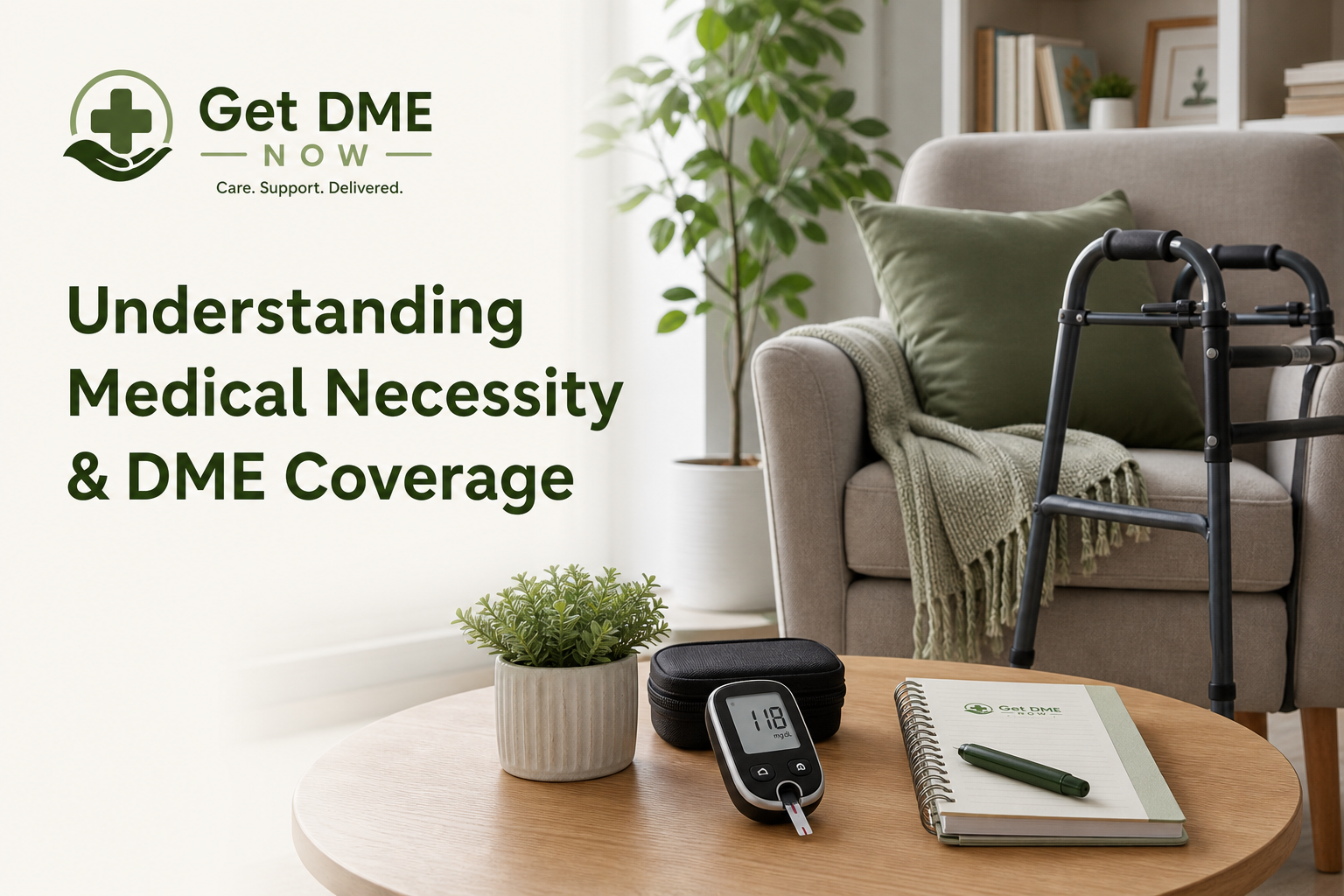
Understanding Medical Necessity and Durable Medical Equipment Coverage
Navigating the world of durable medical equipment (DME) can feel overwhelming, especially when it comes to understanding insurance coverage. One of the most important concepts in this process is medical necessity. If you're exploring options for DME, like blood glucose monitors or mobility aids, it's valuable to know how medical necessity is defined and how it relates to insurance coverage. This guide, provided by Get DME Now, gives a clear, supportive overview to help you feel more confident about the process.
What Is Durable Medical Equipment (DME)?
Durable medical equipment refers to medically necessary devices that are designed for repeated use and can withstand extended use in a home or care setting. DME can range from mobility aids to glucose monitoring systems. Common examples include:
- Wheelchairs and scooters
- Blood glucose monitors and continuous glucose monitoring (CGM) systems
- Insulin pumps
- Orthopedic supports and back braces
- Bathroom safety equipment (such as raised toilet seats or shower chairs)
- Compression therapy devices
DME may support individuals living with chronic health conditions, recovering from surgery, or facing daily challenges to mobility or safety. At Get DME Now, our team helps people find and access equipment that suits their specific needs, often through insurance-eligible programs.
Defining Medical Necessity
What Does Medical Necessity Mean?
Medical necessity is a key insurance term. In general, it refers to healthcare services, procedures, or equipment that are required to diagnose or treat a health condition, illness, injury, or disease and are ordered by a qualified healthcare provider. Insurance plans and Medicare use the concept of medical necessity to determine what will or will not be covered.
How Is Medical Necessity Determined?
- Healthcare Provider Involvement: Only a licensed healthcare provider—such as a doctor, nurse practitioner, or specialist—can determine and document medical necessity for DME by assessing a patient's unique circumstances.
- Insurance Plan Policies: Each insurance company or health plan, including Medicare and Medicaid, has its own definition of what qualifies as “medically necessary” and may update requirements periodically.
- Supporting Documentation: Medical records, test results, and other supporting documentation from your healthcare provider can be part of the process for proving medical necessity.
- Prescription: A valid prescription or written order is typically required for insurance coverage of DME.
Why Is Medical Necessity Important for DME Coverage?
Insurance plans—including private insurance, Medicare, and Medicaid—generally only cover DME that is considered medically necessary for the individual. This means:
- The equipment is needed to treat, manage, or monitor a diagnosed medical condition.
- The equipment is appropriate for home or daily use.
- The requested equipment is not considered a luxury, convenience, or duplicative item.
For example, a continuous glucose monitor may be considered medically necessary for someone who requires ongoing blood sugar management, but not for every person with diabetes. Your healthcare provider will consider your overall health, diagnosis, and treatment plan when making a recommendation.
The Steps to Durable Medical Equipment Coverage
Understanding the general process can help simplify what to expect. Here’s how coverage for DME often works:
1. Assessment by Your Healthcare Provider
- Discuss your health concerns, symptoms, and daily challenges.
- Your provider evaluates whether DME may support your medical plan.
- If appropriate, your provider may recommend specific equipment based on clinical guidelines and your needs.
2. Prescription and Documentation
- You will usually need a written prescription or order for DME.
- Supporting documentation (office visit notes, test results, medical history) may be required by your insurance plan.
- For some equipment, providers may need to document why less intensive options aren’t sufficient.
3. Submitting to Insurance
- The prescription and paperwork are sent to a DME supplier, like Get DME Now.
- The supplier works with your insurance (or Medicare, Medicaid) to check coverage eligibility.
- Additional documentation may be requested by your plan for review.
4. Insurance Determination
- The insurance company reviews the claim to determine if the equipment is covered as medically necessary.
- If approved, insurance may pay all or part of the cost (based on your plan details, deductibles, and out-of-pocket limits).
- If denied, you may appeal or provide further documentation.
Key Questions to Ask About Medical Necessity and DME Coverage
It’s natural to have questions when trying to secure DME through insurance. Consider asking your healthcare provider or DME supplier:
- Is this equipment considered medically necessary for my diagnosis?
- What evidence or documentation will my insurance require?
- Are there other equipment options that may be covered?
- What is the process if coverage is denied?
- Can I try out the equipment before final approval?
- How often might this equipment need to be replaced or renewed?
- Does my plan require prior authorization for this equipment?
- What costs am I responsible for (co-pays, coinsurance, deductibles)?
Examples of DME and Medical Necessity Criteria
While coverage varies, here are some general examples of common DME and their typical medical necessity criteria:
Blood Glucose Monitors
- Usually considered medically necessary for individuals with a diagnosis of diabetes who require regular blood glucose monitoring.
- May require evidence of insulin use or medical records indicating the need.
Continuous Glucose Monitors (CGMs)
- Often recommended for certain people with diabetes who need frequent monitoring and meet specific clinical criteria.
- Your provider will supply documentation on insulin needs and glucose management.
Orthopedic Braces
- May be covered if there is documentation of an injury, surgery, or chronic condition where bracing is clinically indicated.
Wheelchairs and Mobility Equipment
- Typically require clinical notes stating why a wheelchair is needed for home use and why other mobility aids are not adequate.
Compression Therapy Devices
- May be covered if prescribed for chronic conditions such as lymphedema or venous insufficiency.
Get DME Now can help you understand the requirements for each type of equipment and guide you through the process.
Tips for Navigating the DME Coverage Process
Work Closely With Your Healthcare Provider
Your provider plays a central role in documenting medical necessity and preparing the paperwork needed for insurance approval.
Stay Organized
Keep copies of all prescriptions, orders, and communication with your provider and insurance plan. This documentation can make the process smoother if questions arise or if additional information is needed.
Communicate With Your DME Supplier
Suppliers like Get DME Now are experienced in handling insurance submissions and can explain what’s needed for each step. Don’t hesitate to reach out with your questions or for updates.
Understand Your Insurance Plan
Every insurance plan has its own requirements for DME coverage. Reviewing your benefits booklet or speaking with your insurance customer service can help clarify what is covered, what paperwork is needed, and what out-of-pocket costs may apply.
Be Prepared for Prior Authorization
Some equipment requires prior authorization from your insurance before it will be approved. Your supplier and provider can assist in submitting this request, which may include letters of medical necessity and detailed patient records.
Common Misunderstandings About DME and Medical Necessity
- “If my doctor prescribes it, insurance must cover it.” In reality, insurance plans have their own criteria. Coverage isn’t guaranteed without meeting these guidelines.
- “All DME is covered the same way.” Coverage requirements, costs, and replacement schedules can differ greatly between equipment types and insurance plans.
- “Once approved, I’m covered for life.” Many pieces of equipment need periodic review or renewal depending on your condition, usage, and policy limits.
- “Anyone can use another family member’s equipment.” DME coverage is specific to the individual and their documented needs. Sharing equipment is unsafe and may violate insurance policies.
How Get DME Now Can Help
At Get DME Now, we understand how complex DME coverage can seem. Our knowledgeable team provides friendly service, answers your questions, and works closely with you, your healthcare provider, and your insurance plan to:
- Check potential eligibility for DME based on medical necessity and plan requirements
- Understand and organize the necessary documentation
- Submit information to insurance on your behalf
- Help you stay updated through each step of the process
- Offer guidance on available equipment options that may work for your needs
Visit getdmenow.com for helpful resources and support.
Conclusion: Key Takeaways on Medical Necessity and DME Coverage
Understanding medical necessity is important when navigating durable medical equipment coverage. Every step—from talking with your healthcare provider to gathering documentation and working with your insurance plan—helps ensure the equipment you need may be covered and accessible. Remember that coverage varies, and requirements can change from plan to plan.
Choosing durable medical equipment is a personal process that may involve your healthcare provider, insurance plan, medical documentation, and individual needs. Get DME Now helps make the process easier to understand by providing helpful information and assistance with eligible equipment options. To learn more, visit 🌐 getdmenow.com.
Author: Get DME Now
Category: Diabetes Education