A Complete Guide to Blood Pressure Monitoring at Home
Monitoring blood pressure at home can empower individuals to take an active role in their health. With the right equipment, reliable information, and helpful support, tracking your blood pressure at home may become part of an effective wellness routine. This guide from Get DME Now will walk you through key aspects of home blood pressure monitoring, provide tips for choosing and using equipment, answer common questions, and outline how to work with healthcare professionals for the best results.
Understanding Blood Pressure Monitoring
Blood pressure is the force of blood pushing against the walls of your arteries as your heart pumps. Regular monitoring helps you and your healthcare provider keep track of changes that may signal the need for treatment or lifestyle adjustments. Home monitoring offers several potential benefits, including:
- Providing frequent readings between doctor visits
- Helping track responses to medication or lifestyle changes
- Supporting conversations with your care team
- Reducing anxiety associated with in-office checks, sometimes called “white coat hypertension”
What Is a Blood Pressure Monitor?
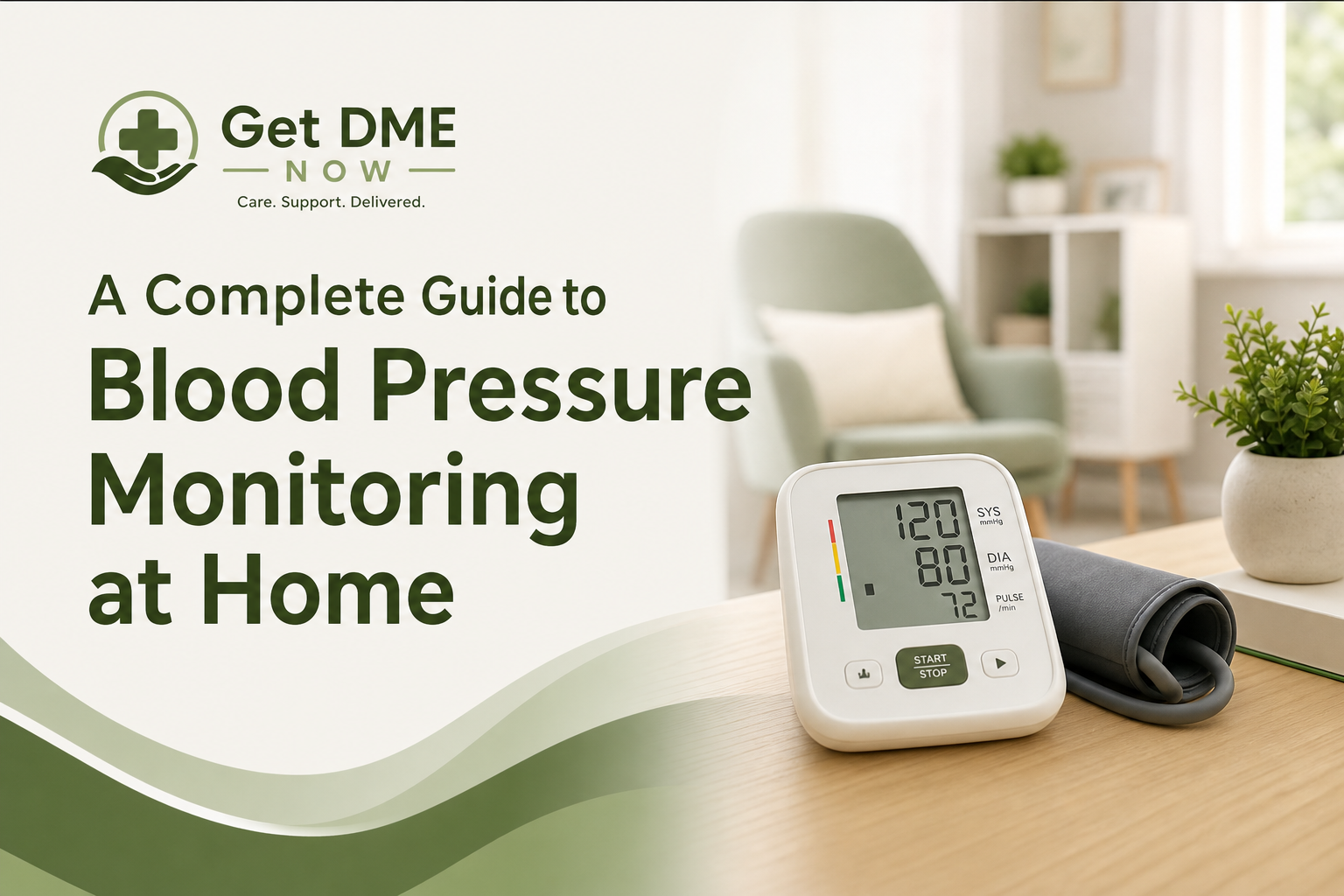
A blood pressure monitor, also called a sphygmomanometer, is a medical device designed to measure your blood pressure. The most common type for home use is an upper-arm cuff monitor, which delivers digital readings.
Why Monitor Blood Pressure at Home?
Home monitoring is increasingly recommended for several reasons:
- Detecting changes early: Unexpected increases or decreases in blood pressure may be identified sooner when readings are taken regularly at home.
- Providing additional data: Many healthcare providers rely on home readings to get a broader picture of your blood pressure trends over time.
- Supporting self-management: Understanding your numbers helps you actively participate in your care plan.
Home monitoring does not replace regular checkups or professional diagnosis but serves as an additional tool to work with your healthcare team.
Types of Blood Pressure Monitors for Home Use
When choosing a blood pressure monitor, it’s important to select the equipment that meets your needs and is recommended by your provider. Common types include:
Upper Arm Monitors
- Most widely recommended: Often preferred by healthcare professionals for their accuracy.
- Automatic inflation: Most models are easy to use, inflating the cuff and providing a clear, digital reading.
- Available in various cuff sizes: Ensuring a good fit is crucial for accurate results.
Wrist Monitors
- Smaller and portable: Can be easier to transport or store.
- Require careful positioning: These may be more sensitive to body position and typically require that the wrist is held at heart level.
- May be less accurate: Some individuals and providers prefer upper arm monitors unless a wrist device is specifically recommended.
Finger Monitors
- Less frequently used: Generally not recommended due to inconsistent results for home monitoring.
What To Look For in a Home Blood Pressure Monitor
Choosing the right monitor can make a significant difference in the reliability of your readings. Here are important points to consider:
- Validation and accuracy: Choose a monitor that has been validated for accuracy by appropriate regulatory bodies.
- Size: Make sure the cuff fits your arm correctly. A cuff that is too large or too small can affect readings.
- Ease of use: Look for a clear display and simple controls.
- Memory/storage: Many devices save past readings so you can review trends over time.
- Power options: Consider whether the device uses batteries, charging cables, or both.
- Compatibility: Some monitors can share data with smartphone apps—helpful if you are tracking readings over time or sharing information remotely with your provider.
How to Use a Blood Pressure Monitor at Home
Accurate home blood pressure monitoring requires the right technique. Here’s a general step-by-step guide, but always refer to your device’s specific instructions and ask your healthcare provider for guidance:
Preparation
- Avoid caffeine, exercise, or smoking for at least 30 minutes before measuring.
- Sit quietly for 5 minutes before taking a reading.
- Empty your bladder if needed, as a full bladder may affect results.
- Rest your arm comfortably at heart level on a flat surface.
Taking Your Reading
- Position the cuff correctly: Follow device instructions for placement on your upper arm or wrist.
- Sit still and remain silent: Don’t talk or move during the measurement.
- Take multiple readings: Many providers recommend two or three measurements, one minute apart, and recording the average.
- Write down or store results: Note the date, time, and any relevant observations (such as feeling dizzy, stressed, or unwell).
Tips for Better Accuracy
- Take readings at the same time each day, if possible.
- Use the same arm for consistency.
- Record all readings, even if they seem out of the ordinary.
Understanding Your Blood Pressure Readings
Blood pressure readings look like two numbers, such as 120/80 mmHg. Here’s what they mean:
- Systolic pressure (top number): The pressure when your heart beats.
- Diastolic pressure (bottom number): The pressure when your heart rests between beats.
Blood pressure categories (ask your provider for your individual targets):
- Normal: Lower than 120/80 mmHg
- Elevated: Systolic between 120-129 and diastolic lower than 80 mmHg
- High blood pressure (hypertension): Systolic 130 mmHg or higher, diastolic 80 mmHg or higher
These categories may differ for some individuals, especially those with certain health conditions. Always discuss your blood pressure targets with your healthcare provider.
Common Questions When Beginning Home Blood Pressure Monitoring
What time of day should I check my blood pressure?
Many providers recommend taking blood pressure measurements at the same times each day, such as once in the morning and once in the evening. This helps create a consistent trend line. Ask your provider what schedule is best for you.
How often should I check my blood pressure?
This varies by individual, based on your provider’s recommendations. Some people may need daily readings, others may only need periodic checks.
What should I do if my blood pressure is high or low?
Contact your healthcare provider for guidance. Do not make medication changes based on home readings unless instructed to do so by a qualified provider.
Can stress or anxiety affect my blood pressure reading?
Yes, stress, anxiety, pain, or other factors such as recent activity can temporarily increase blood pressure. A consistent environment and careful preparation can help provide the most accurate results.
Supporting Your Blood Pressure Management Plan
Blood pressure monitoring at home is most effective when used together with your healthcare provider’s advice. Here’s how to make the most of your monitoring routine:
- Keep a log: Write down readings or use your monitor’s memory features.
- Share trends with your provider: Bring your log to appointments or send digital reports when requested.
- Ask questions: Discuss any unusual readings, symptoms, or device concerns.
Insurance, Prescriptions, and Medical Equipment Eligibility
Some blood pressure monitors may be covered through insurance when prescribed and considered medically necessary. Coverage and eligibility requirements vary by insurance plan. You may need a prescription and additional supporting documentation to qualify. The team at Get DME Now can help you understand:
- What equipment options may be available to you
- What insurance documentation may be required
- How to check eligibility for covered equipment
- How to get started with a prescription or necessary forms
Learn more about available equipment and assistance at 🌐 getdmenow.com.
Cleaning, Maintenance, and Storage Tips
Taking good care of your blood pressure monitor helps ensure safety, accuracy, and device longevity. Follow your manufacturer’s instructions. General tips include:
- Wipe the monitor and cuff gently with a soft, damp cloth
- Store the device in a cool, dry place away from direct sunlight
- Remove batteries if storing for long periods
- Inspect for signs of damage or wear
- Do not apply harsh chemicals or immerse in water
Key Questions to Ask Your Healthcare Provider About Home Blood Pressure Monitoring
- Is home blood pressure monitoring recommended for me?
- Which type of blood pressure monitor should I use?
- How often and at what times should I take my readings?
- What should I do if I get a reading outside of my normal range?
- Should I record my readings manually, digitally, or both?
- Who should I contact if I have concerns about my readings or device?
Conclusion
Blood pressure monitoring at home can be a powerful tool for supporting your overall health. Choosing the appropriate device, understanding how to use it, and working closely with your healthcare provider are all important steps in this process. Remember, individual needs and insurance coverage vary—what works for one person may be different for another. If you're considering a home blood pressure monitor, Get DME Now provides helpful information, support, and assistance with eligible equipment options.
Choosing durable medical equipment is a personal process that may involve your healthcare provider, insurance plan, medical documentation, and individual needs. Get DME Now helps make the process easier to understand by providing helpful information and assistance with eligible equipment options. To learn more, visit 🌐 getdmenow.com.
Author: Get DME Now