Prior Authorization vs. Prescription Requirements for Medical Equipment
Understanding how to access durable medical equipment (DME) can be confusing, especially when navigating insurance and documentation requirements. Two terms often discussed are prior authorization and prescription requirements. Though related, these steps are distinct parts of the process for obtaining DME such as continuous glucose monitors, back braces, mobility equipment, or compression devices. In this article, we’ll explain what each term means, why they matter, and how Get DME Now can support you every step of the way.
What Is Durable Medical Equipment (DME)?
Durable medical equipment is a broad category that includes medical devices and supplies designed for repeated use at home to address certain medical needs. Examples include:
- Blood glucose monitors and continuous glucose monitoring (CGM) systems
- Insulin pumps
- Back and orthopedic braces
- Compression garments
- Wheelchairs and mobility aids
- Bathroom safety equipment
Most insurance plans, including Medicare, have specific eligibility rules and documentation requirements for DME.
Understanding Prescription Requirements
What Is a Prescription for Medical Equipment?
A prescription is a written order from a qualified healthcare provider (such as a physician or nurse practitioner) stating that a specific piece of equipment is medically necessary for a patient’s care. Much like prescriptions for medications, these orders usually contain:
- The patient’s name and date of birth
- The type and quantity of equipment
- The medical need or diagnosis
- The length of time the equipment is required (if applicable)
Why Do You Need a Prescription?
Most DME—especially equipment that supports ongoing medical conditions—requires a prescription to ensure:
- Appropriate use and safety
- Clinical necessity
- Accurate documentation for insurance claims
How to Get a Prescription
The process typically involves:
- Consulting your healthcare provider: A discussion about your needs is essential.
- Receiving a written order: Your provider will determine what equipment is most appropriate.
- Sharing the prescription with your DME supplier: Companies like Get DME Now work with your provider to gather the needed paperwork.
Prescriptions are usually the first step in the equipment procurement process and are essential for insurance coverage and medical documentation.
What Is Prior Authorization?
Definition of Prior Authorization
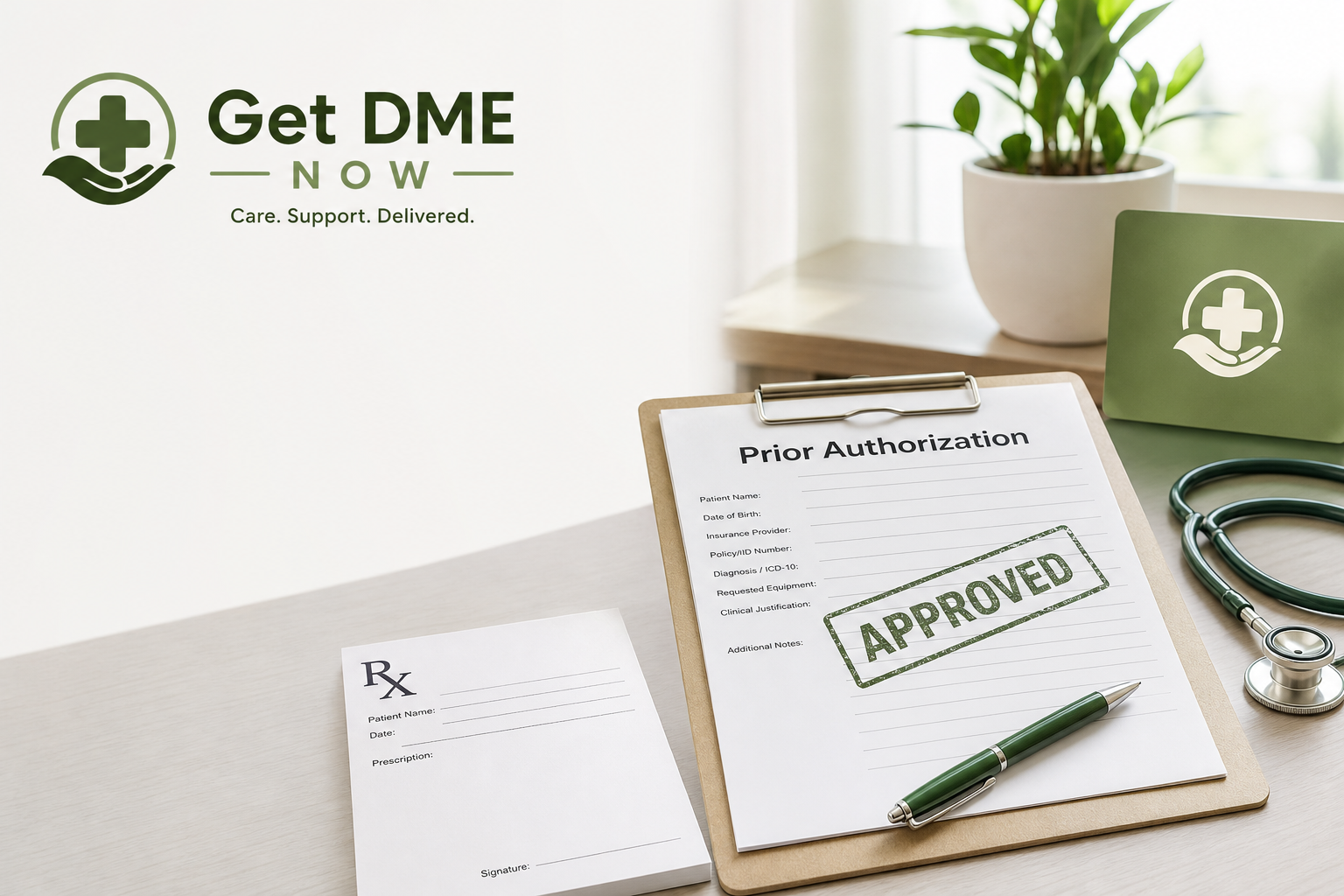
Prior authorization is an approval process required by some insurance companies before certain types of DME will be covered and supplied. This acts as a checkpoint that verifies the equipment is medically necessary and meets specific insurance plan guidelines.
How Does Prior Authorization Differ from a Prescription?
- Prescription: Issued by your healthcare provider to verify medical need.
- Prior Authorization: Issued by the insurance company as approval before equipment can be provided and paid for.
While a prescription is always required for most medical equipment, prior authorization may only be required for certain items, depending on your plan and the device in question.
When Is Prior Authorization Required?
Some examples of DME that may require prior authorization include:
- High-cost equipment (e.g., insulin pumps, some wheelchairs)
- Advanced diabetes monitoring systems
- Some mobility devices or specialty braces
Insurance requirements vary, so it is always best to confirm whether your equipment requires prior authorization before proceeding.
The Prior Authorization Process: Step by Step
- Submitting the Request: Once you have a prescription, your DME supplier or healthcare provider submits a prior authorization request to your insurance company.
- Documentation Review: The insurance company will review the submitted documents, which may include clinical notes, diagnostic test results, and proof of medical need.
- Approval or Denial: The insurer makes a decision. If approved, you can proceed. If denied, you have options to appeal or request more information.
- Order Fulfillment: Once authorization is granted, the DME supplier moves forward with processing and delivery.
Timelines may vary, and documentation must meet the insurance plan’s standards to avoid delays.
What Does Your Healthcare Provider Do?
Healthcare providers play a central role in the DME process by:
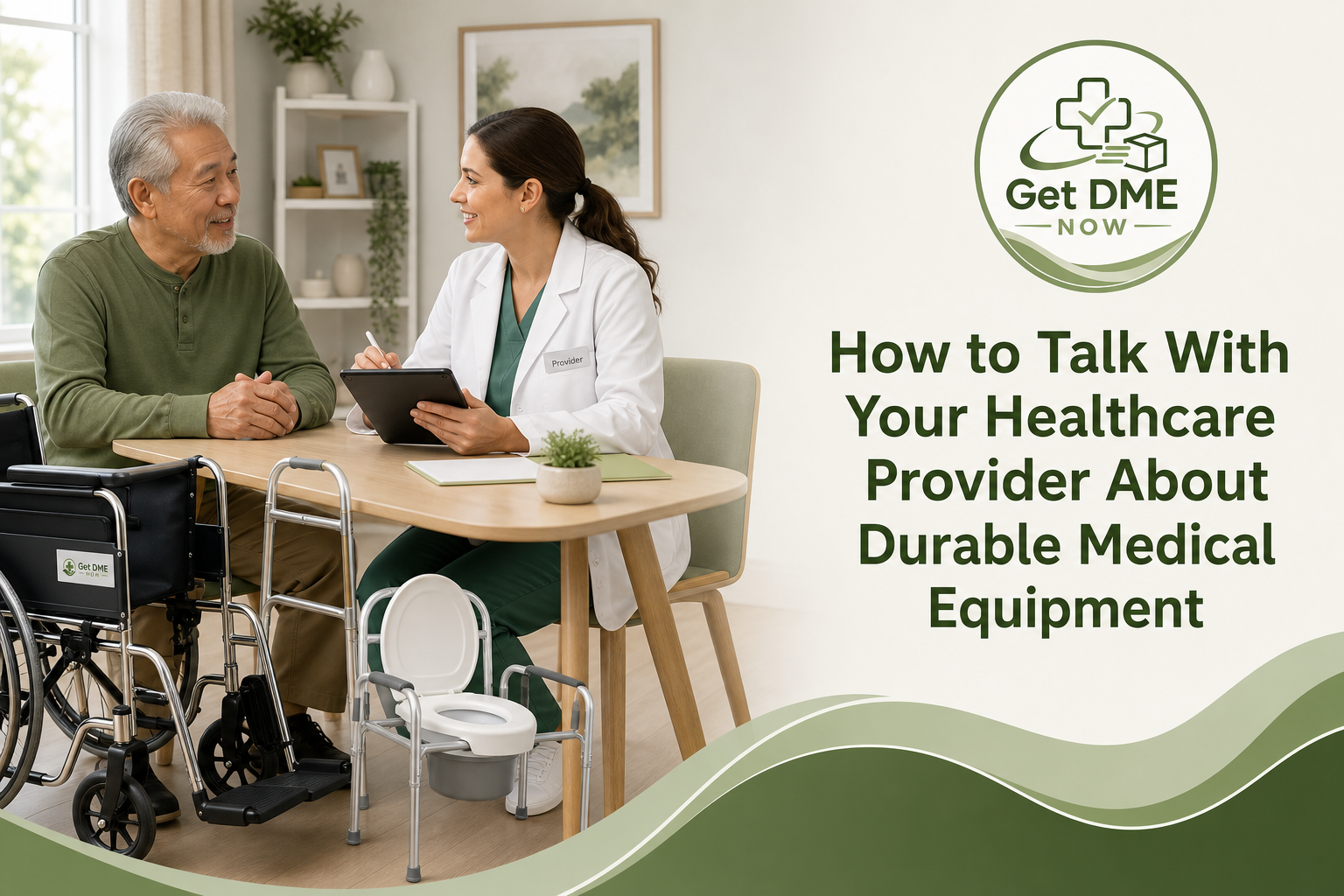
- Assessing your needs and writing a prescription
- Providing supporting medical documentation
- Helping to answer insurer’s questions during the prior authorization review, if needed
Always speak with your provider to understand what documentation may be necessary and how to keep your paperwork updated.
How DME Suppliers Like Get DME Now Help
The process of gathering documentation and dealing with insurance can feel overwhelming. That’s where experienced DME suppliers like Get DME Now come in. Their team helps:
- Coordinate between you, your provider, and your insurance company
- Request the appropriate prescription or medical order
- Submit prior authorization documents to your insurer (when required)
- Keep you informed about your order’s progress and next steps
You can learn more about how Get DME Now supports clients at 🌐 getdmenow.com.
Common Misunderstandings About Prescriptions and Prior Authorization
“If my doctor writes a prescription, my insurance will automatically cover the equipment.”
Unfortunately, insurance coverage is not guaranteed by a prescription alone. Some plans require additional review steps, including prior authorization. Always check with your supplier and insurer for coverage criteria.
“Prior authorization and a prescription are the same thing.”
These are separate requirements. A prescription verifies clinical need, while prior authorization is an insurance company’s approval process for coverage.
“The process is the same for every type of equipment.”
Requirements vary based on the device, insurance plan, and medical documentation. Some equipment only requires a prescription, while other items require both detailed documentation and insurer approval before shipment.
What Questions Should I Ask?
When discussing DME needs, consider asking your healthcare provider and supplier:
- What equipment is most appropriate for my needs?
- Does my insurance require prior authorization for this item?
- What documentation is needed for coverage?
- How long does approval typically take?
- What role do I play in the process?
Get DME Now can help answer many of these questions and will work directly with your insurance and provider to help smooth the process.
The Role of Insurance in DME Approvals
Insurance plans help make DME accessible by covering medically necessary equipment. However, each policy has specific rules about what is covered, how often equipment can be replaced, and what documentation is needed. Factors that impact insurance approval include:
- Type of equipment requested
- Medical necessity, based on your provider’s documentation
- Prior use of similar devices
- Plan-specific coverage guidelines
Coverage is rarely automatic. Keeping clear, accurate, and up-to-date paperwork helps avoid delays and denials.
Typical Documentation Needed
For most DME, the following may be required:
- A valid prescription
- Recent clinic visit notes
- A statement of medical necessity
- Test results or supporting diagnostic information, if needed
- Insurance forms or prior authorization requests (if applicable)
Your DME supplier can help clarify which documents are specific to your equipment and insurer.
What to Expect in Terms of Timing
- Prescriptions – These can typically be completed at your provider’s office during a visit.
- Prior Authorization – This process may take several days to weeks, depending on the insurer and the completeness of documentation.
- Order Processing and Delivery – Once approvals are in place, most equipment can be shipped and delivered promptly, but processing times vary.
Tips for a Smoother Equipment Approval Process
- Communicate openly with your provider about your needs
- Keep copies of all paperwork and communications
- Respond promptly to requests for additional documentation
- Follow up with your DME supplier if you have questions
- Be aware that insurance and documentation requirements may change over time
How Get DME Now Supports You
Navigating the rules of prescriptions and prior authorization can be overwhelming, but you do not have to do it alone. Get DME Now specializes in guiding clients through the process by:
- Explaining what documents and approvals are needed
- Working with your provider to gather everything required
- Coordinating with your insurance company to check your eligibility
- Keeping you updated every step of the way
To learn more about available equipment, required steps, and how Get DME Now can help, visit 🌐 getdmenow.com.
Conclusion: Understanding Prescription and Prior Authorization Requirements
Knowing the difference between prescriptions and prior authorization is essential for anyone seeking durable medical equipment. A prescription from your provider is often the first step, but insurance plans may require additional approval through prior authorization. Documentation and coverage requirements vary by equipment type and insurance policy, so working with an experienced supplier can help ensure a smooth process. Choosing durable medical equipment is a personal process that may involve your healthcare provider, insurance plan, medical documentation, and individual needs. Get DME Now helps make the process easier to understand by providing helpful information and assistance with eligible equipment options. To learn more, visit 🌐 getdmenow.com.