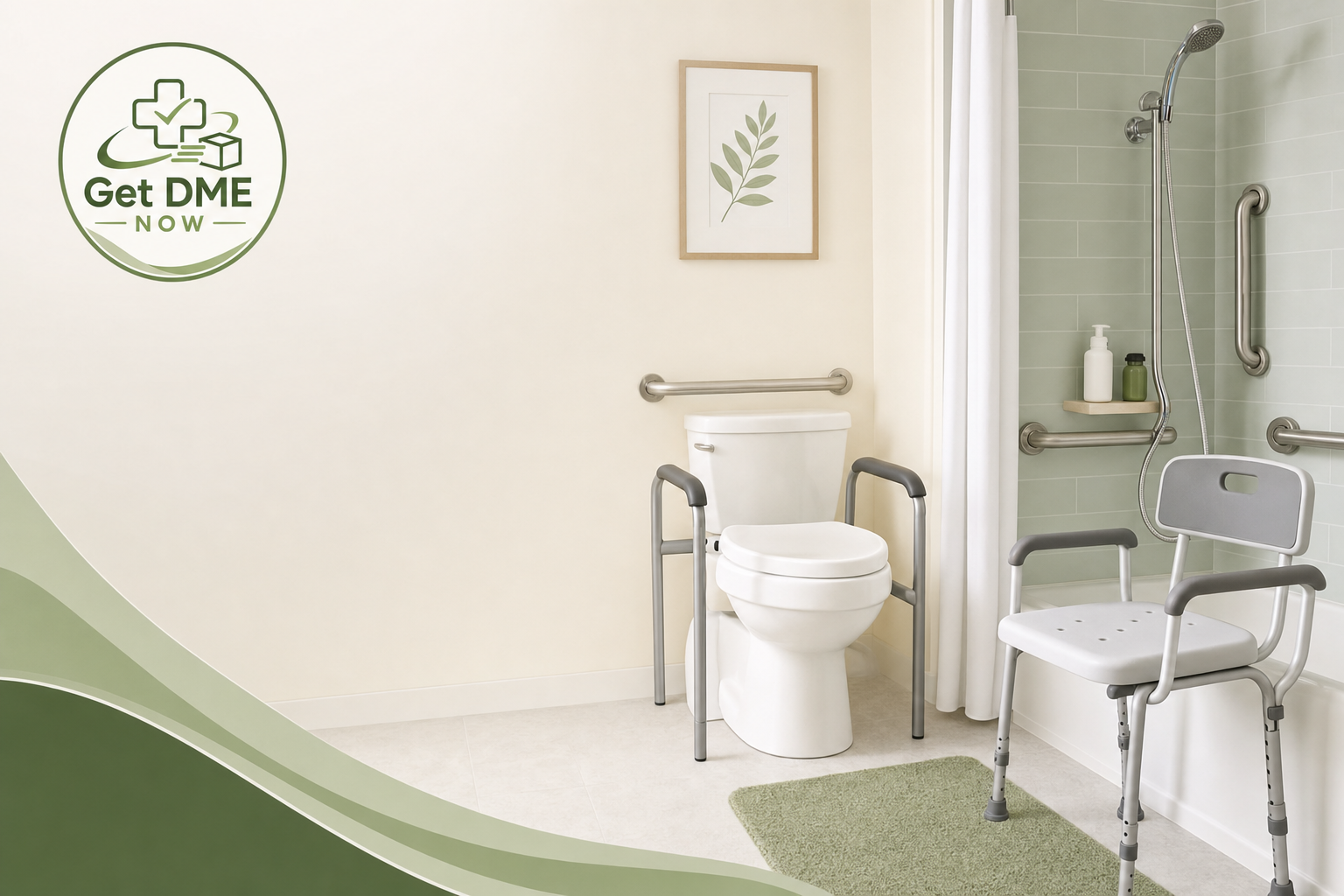
Essential Bathroom Safety Equipment for the Home
Bathrooms are one of the most common places for slips and falls, especially for people managing health conditions, mobility challenges, or reduced strength. Taking steps to improve bathroom safety can help reduce risks and provide peace of mind for individuals and caregivers alike. This guide explores essential bathroom safety equipment commonly recommended for home use and explains how Get DME Now can help you understand your options.
Why Bathroom Safety Equipment Matters
The bathroom presents unique hazards due to hard surfaces, water, and confined spaces. For many individuals—including older adults, those recovering from surgery, or those managing chronic health issues—making the environment safer is a key part of maintaining independence and confidence at home.
Common Risk Factors in the Bathroom
- Wet, slippery floors
- Low toilet seats
- High tub walls
- Limited grab points
- Reduced vision or balance
- Weakness in legs or arms
Bathroom safety equipment is designed to address these risks, providing additional support and helping to prevent common accidents.
Types of Essential Bathroom Safety Equipment
Choosing the right equipment depends on individual needs, bathroom layout, and recommendations from a healthcare provider. Here are some of the most widely recommended options:
1. Grab Bars
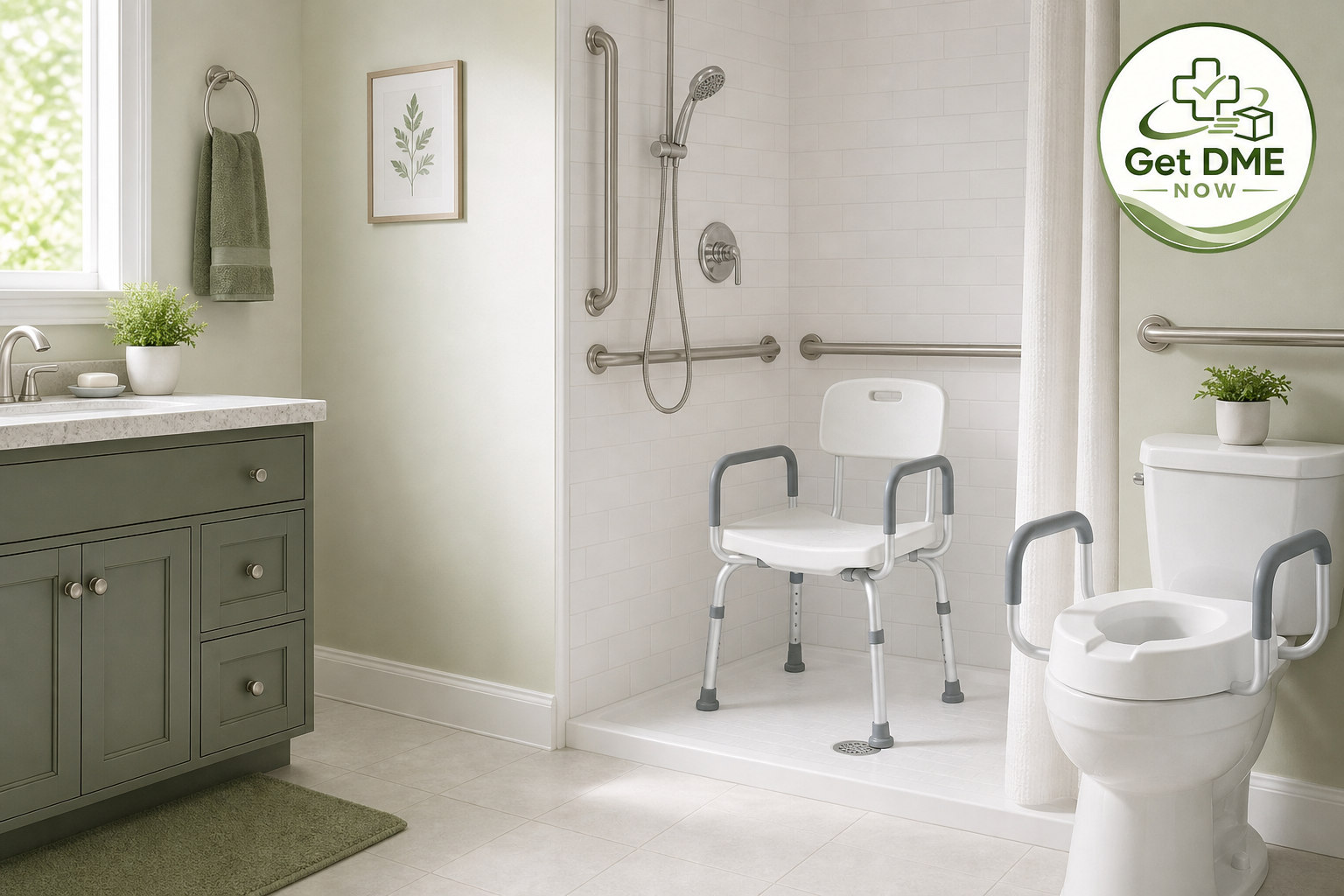
Grab bars are sturdy handholds installed near showers, tubs, and toilets. They provide support for:
- Getting in and out of the bathtub or shower
- Sitting down or standing up from the toilet
- Steadying yourself on slippery surfaces
Features to Consider:
- Proper installation into wall studs for secure support
- Variety of lengths and styles
- Textured or non-slip finishes
- Placement at height recommended by your healthcare provider
2. Raised Toilet Seats
For those who have difficulty bending or standing, a raised toilet seat increases the height of the toilet, reducing strain on knees and hips.
Types Include:
- Simple risers that fit over the existing toilet bowl
- Options with armrests for extra support
- Models with locking mechanisms for stability
3. Shower Chairs and Benches
A shower chair or transfer bench allows you to remain seated while bathing, reducing the risk of slips and falls.
Benefits:
- Provides a stable place to sit
- Assists people who tire quickly or have trouble standing
- Easy to move in and out of the tub or shower
- Some models have backrests and armrests for added security
4. Non-Slip Mats and Strips
Non-slip bathtub or shower mats, and adhesive strips, provide additional traction on slick surfaces.
Features:
- Designed to prevent feet from sliding
- Easy to install and clean
- Available for floors, tubs, and shower stalls
5. Handheld Showerheads
A handheld showerhead makes bathing easier when seated, and reduces the need to twist or stretch.
Considerations:
- Long hoses for flexible reach
- Easy-to-use controls
- Can be paired with shower chairs or benches
6. Toilet Safety Frames
A toilet safety frame is a freestanding or mounted frame that surrounds the toilet, offering support for sitting and standing.
Key Points:
- Height-adjustable
- Some attach to the toilet, others are stand-alone
- Often include padded hand grips
7. Transfer Benches
Transfer benches extend beyond the edge of the bathtub, allowing users to sit outside and scoot into the tub safely.
Benefits:
- Reduces need to step over high tub walls
- Supports smooth entry and exit
- Often height-adjustable
8. Bath Lifts
A powered bath lift gently lowers and raises users into and out of the tub, supporting individuals who need additional assistance.
Who Might Benefit:
- Those with significant mobility or balance challenges
- Individuals unable to stand or lower themselves safely
9. Toilet Commode Chairs
A bedside commode may be useful for people who have difficulty reaching the bathroom in time. Some can be placed over the toilet for extra support.
Features:
- Portable and adjustable designs
- Removable for easy cleaning
- May come with padded seats and armrests
How to Choose the Right Bathroom Safety Equipment
Selecting equipment should be a collaborative process between the individual, caregivers, and healthcare providers. Consider:
- Medical needs: What specific mobility, balance, or strength challenges are present?
- Bathroom layout: Are there limitations for placement or installation?
- Temporary vs. long-term use: Will the equipment be needed indefinitely or just for a recovery period?
- Ease of cleaning: Is regular cleaning practical for the device?
- Compatibility: Will the equipment fit with current bathroom fixtures and dimensions?
Get DME Now can provide information on available equipment options and help you navigate the selection process. For questions about insurance coverage or eligibility, speaking with a qualified healthcare provider is always recommended.
Installation and Proper Use
Proper installation of safety equipment is crucial for effectiveness. Many devices, such as grab bars and toilet safety frames, require:
- Secure attachment to wall studs or solid surfaces
- Professional or experienced installation (especially for permanent fixtures)
- Testing for weight tolerance before use
Always follow manufacturer instructions and consult with a professional when needed. Some equipment, like non-slip mats and shower chairs, require no installation beyond correct placement.
Maintaining Safety Equipment
Keeping bathroom safety equipment clean and in good working order helps maintain a safe environment.
Tips for Maintenance:
- Regularly inspect for signs of wear or damage
- Clean surfaces according to manufacturer guidelines
- Ensure suction cups, clamps, and adjustable features are secure and functional
- Replace worn or damaged equipment promptly
Insurance Coverage and Bathroom Safety Equipment
Some bathroom safety equipment may be considered durable medical equipment (DME) and may be covered in part by certain insurance plans when medically necessary and prescribed by a healthcare provider. Coverage can depend on multiple factors, including:
- Medical necessity as determined by a qualified healthcare provider
- Type of insurance plan
- Specific equipment requested
- Supporting documentation and prescription
It’s important to check with your insurance provider and consult with a DME supplier, such as Get DME Now, to understand what may be covered and what steps are required for eligibility.
Learn more at Get DME Now.
Addressing Common Misunderstandings
"I Only Need Safety Equipment If I’ve Already Fallen."
Bathroom safety equipment is most effective when installed proactively, not just after an incident. Prevention is safer than recovery.
"All Bathroom Safety Products Are the Same."
There are many types and models, each designed for different needs. Professional guidance can help you select the right options.
"It’s Difficult to Install Safety Equipment."
Many products are designed for simple placement, while others can be installed by a professional. Get DME Now can provide additional resources and answer questions about what’s required.
Questions to Discuss With Your Healthcare Provider
- What specific risks should I address in my bathroom?
- Which equipment options are most appropriate for my needs?
- How should these devices be installed and used?
- Should I consider additional mobility aids or support devices?
- What documentation is required for insurance coverage?
Supporting Safe, Comfortable Independence at Home
Empowering yourself or a loved one to maintain independence is best achieved with the proper information and the right equipment. Bathroom safety equipment is a practical and often essential part of that process, helping to reduce risk, increase comfort, and support daily routines.
Get DME Now offers educational resources and assistance with eligible equipment options, making the process more approachable and less overwhelming. Whether you are preparing your home for post-surgical recovery, addressing age-related changes, or managing a health condition, understanding the available equipment can make a significant difference.
Conclusion: Choosing Bathroom Safety Equipment for Peace of Mind
Improving bathroom safety is a key step toward greater independence and comfort at home. The right equipment—selected, installed, and maintained appropriately—may help reduce fall risks and support daily living. Coverage and eligibility for equipment vary, so working with a healthcare provider and a trusted supplier like Get DME Now can help you better understand your options.
Choosing durable medical equipment is a personal process that may involve your healthcare provider, insurance plan, medical documentation, and individual needs. Get DME Now helps make the process easier to understand by providing helpful information and assistance with eligible equipment options. To learn more, visit 🌐 getdmenow.com.