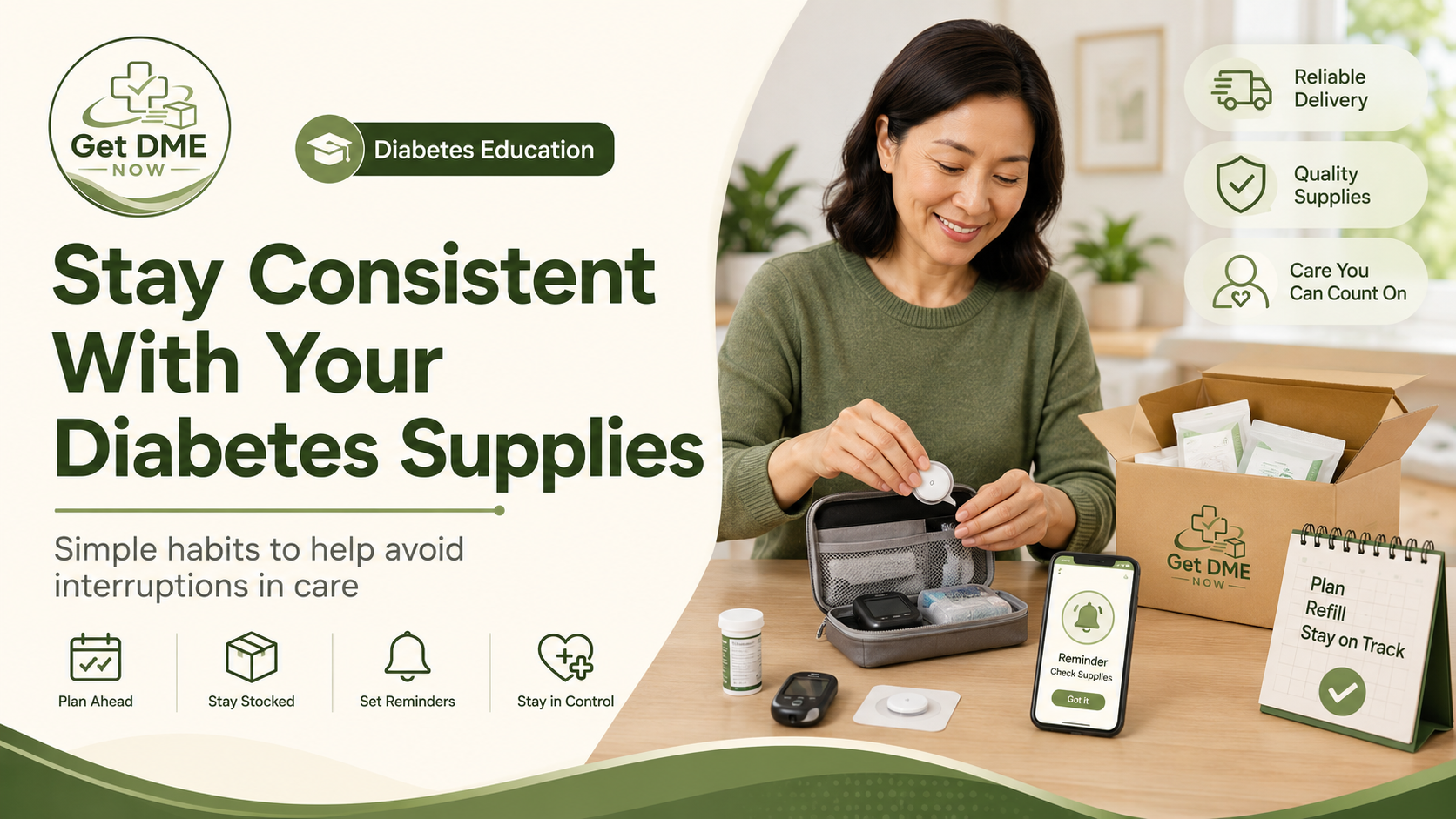
How to Stay Consistent With Your Diabetes Supplies and Avoid Interruptions in Care
Managing diabetes often involves following a consistent routine. You may need to monitor your glucose, take medications as directed, attend medical appointments, stay active, plan balanced meals, and make sure you always have the supplies you need.
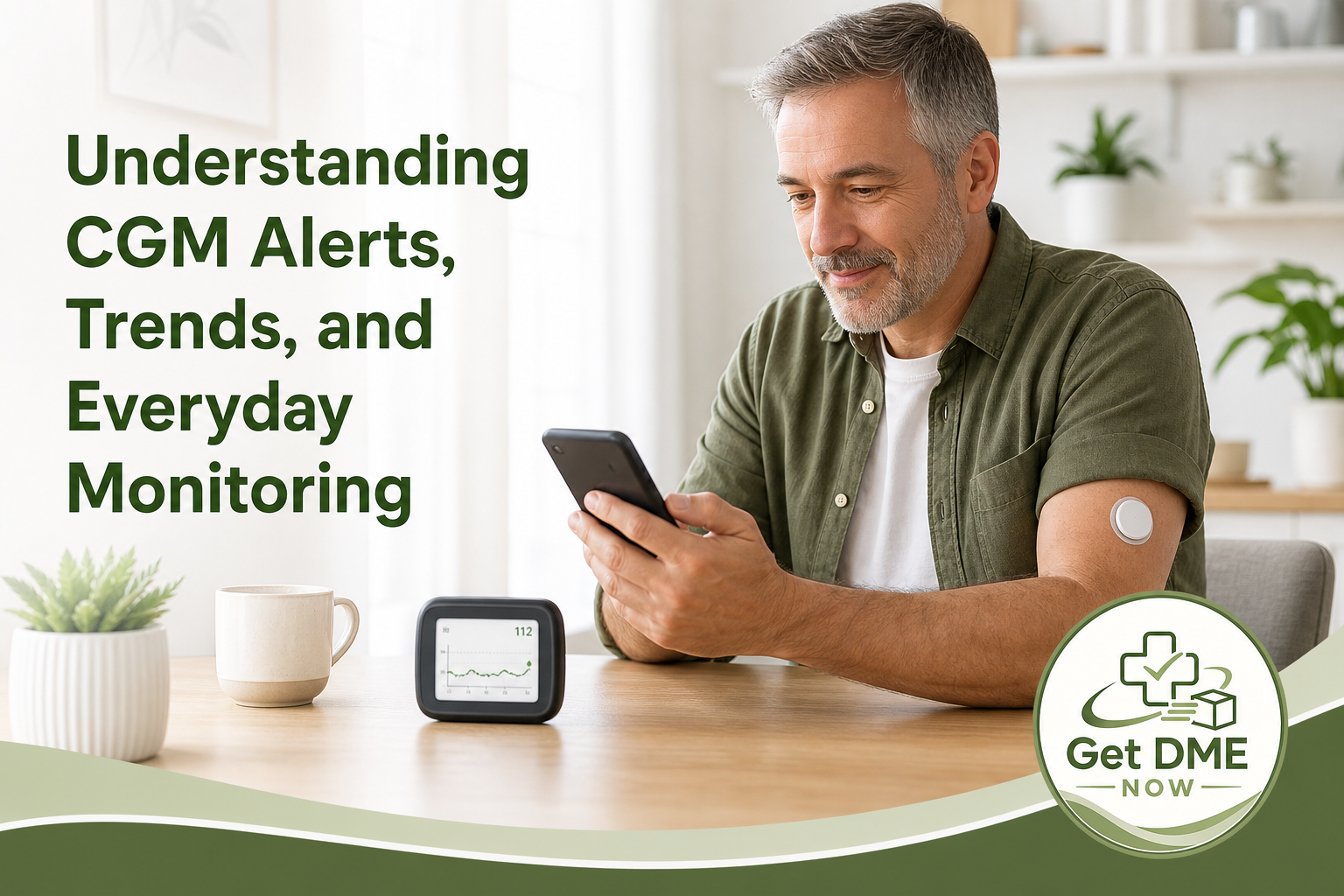
When an important item runs out unexpectedly, that routine can become more difficult. A delay in receiving Continuous Glucose Monitor (CGM) sensors, testing supplies, or other durable medical equipment may leave you without the tools you normally use to understand and manage your health.
Fortunately, a little preparation can help you stay organized and reduce the risk of interruptions. Here are several practical ways to stay on top of your diabetes supplies.
1. Learn How Long Each Supply Lasts
Start by understanding the replacement schedule for the equipment and supplies you use.
For example, CGM sensors are designed to be worn for a specific number of days before they need to be replaced. Other supplies may be delivered monthly, every few months, or according to the schedule allowed by your insurance plan.
Write down:
- The date you started using your current supply
- The expected replacement date
- How many replacements you have remaining
- When your next shipment should arrive
- The phone number of your equipment supplier
You can keep this information in a notebook, on a calendar, or in your phone. Knowing your schedule makes it easier to notice when a shipment may be late.
2. Do Not Wait Until You Use Your Last Item
One of the easiest ways to avoid running out is to check your inventory before you reach your final sensor or supply.
Choose one day each week to review what you have available. This could become part of your regular routine, just like organizing medications or planning meals.
Contact your supplier early when:
- You are getting close to your final replacement
- Your next shipment has not arrived as expected
- Your prescription is approaching its expiration date
- Your insurance information has changed
- Your doctor or medical office has changed
- Your address or telephone number has changed
Addressing these issues early gives your supplier, healthcare provider, and insurance company more time to resolve them.
3. Keep Your Insurance Information Updated
Insurance plans can change from year to year. Even when you remain with the same insurance company, your member identification number, coverage rules, deductible, or supplier network may be different.
Inform your medical equipment provider whenever you receive a new insurance card or experience a change in coverage.
Keeping accurate information on file can help prevent delays caused by:
- An expired insurance policy
- An incorrect member identification number
- A change in your primary or secondary insurance
- A missing referral or authorization
- Updated documentation requirements
Coverage and out-of-pocket costs vary by insurance plan. Your benefits should always be verified before new equipment or supplies are shipped.
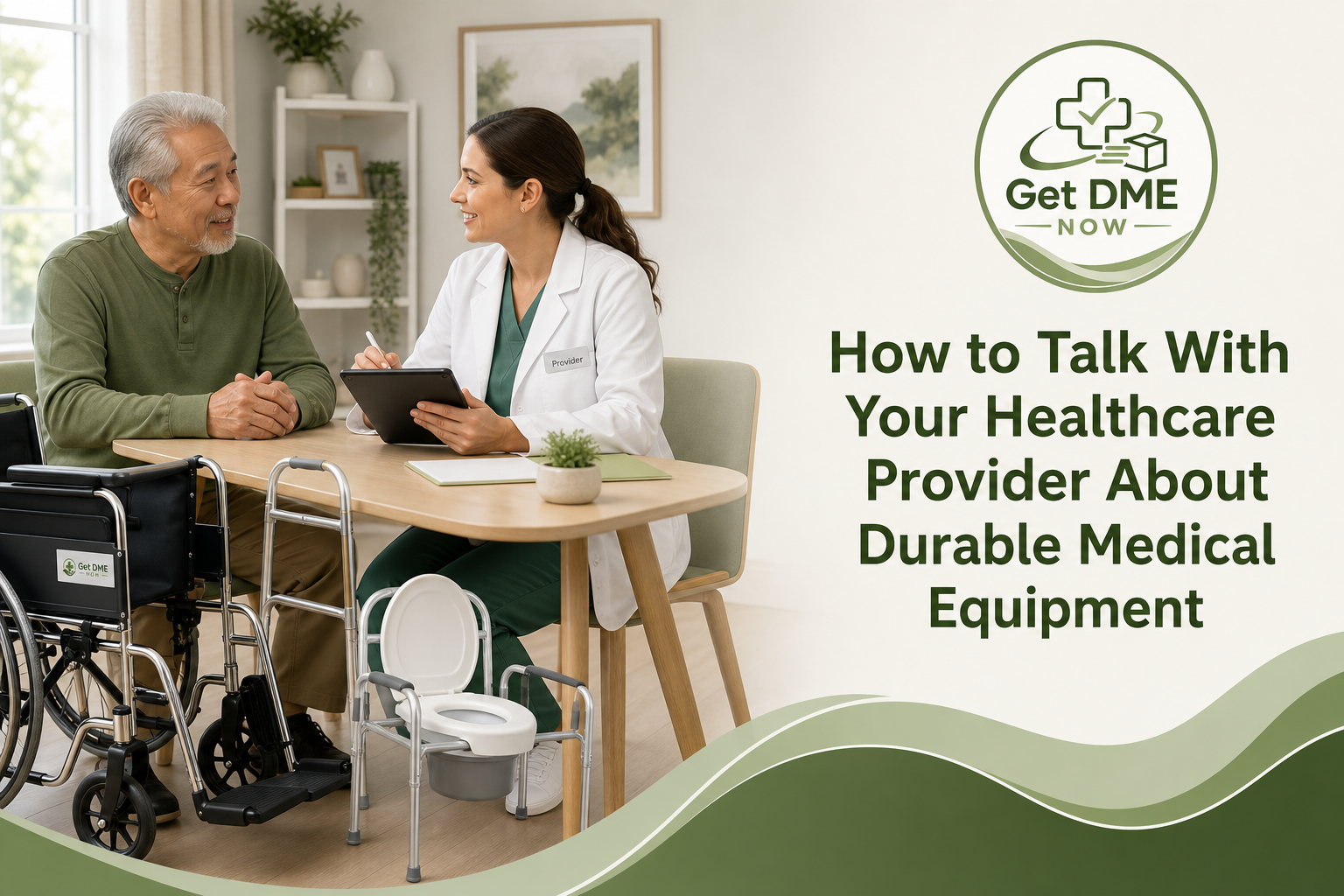
4. Stay Connected With Your Healthcare Provider
Certain diabetes supplies and types of durable medical equipment may require a prescription, medical records, or documentation showing that the equipment is medically necessary.
Respond promptly when your healthcare provider asks you to schedule an appointment or provide updated information. Missing documentation can sometimes delay insurance approval or future shipments.
During your appointments, let your healthcare provider know:
- How often you are using your equipment
- Whether the equipment is working correctly
- Whether your treatment plan has changed
- Whether you are experiencing skin irritation or discomfort
- Whether you are having difficulty understanding your readings
- Whether you have missed supplies or experienced delivery problems
Your healthcare provider can determine whether your current equipment remains appropriate for your individual needs.
5. Store Your Supplies Properly
Diabetes supplies should be stored according to the manufacturer’s instructions. Excessive heat, moisture, direct sunlight, or freezing temperatures may damage certain items.
Keep your supplies in a clean and organized location where they are easy to find. Avoid leaving sensitive equipment in a hot vehicle, near a window, or in a damp bathroom.
It can also help to keep older supplies in front and newer supplies behind them. This encourages you to use items in the order they were received and reduces unnecessary waste.
Before using an item, check:
- The expiration date
- The packaging for damage
- The product instructions
- Whether it was stored under the recommended conditions
Do not use a damaged or expired item without first speaking with the manufacturer, your healthcare provider, or your medical equipment supplier.
6. Prepare for Travel and Unexpected Situations
Trips, severe weather, power outages, and delivery disruptions can affect your normal routine.
Before traveling, calculate how many supplies you will need for the entire trip and bring extra whenever possible. Keep important diabetes supplies in your carry-on bag instead of checked luggage when flying.
Consider keeping a small travel kit containing:
- Extra monitoring supplies
- Charging cables or batteries when applicable
- Manufacturer instructions
- Your medication list
- Your healthcare provider’s contact information
- Your insurance information
- Your equipment supplier’s contact information
Having this information available can make it easier to get help when you are away from home.
7. Understand What Your Insurance Plan Covers
Many insurance plans provide coverage for medically necessary diabetes supplies and durable medical equipment when eligibility requirements are met. However, coverage is not identical for every person.
Your potential cost may depend on:
- Your insurance company
- Your specific health plan
- Medical necessity requirements
- Your deductible
- Copayments or coinsurance
- Whether the supplier is in network
- Required prescriptions and medical documentation
Some eligible patients may receive covered equipment with little or no out-of-pocket cost, while others may be responsible for a copayment, deductible, or coinsurance.
Never assume that an item is completely covered until your individual benefits have been reviewed.
How Get DME Now Can Help
Understanding insurance requirements and coordinating paperwork can feel overwhelming, especially when you are already managing your health.
Get DME Now helps eligible patients access Continuous Glucose Monitors, diabetes supplies, and other types of durable medical equipment through their insurance coverage.
Our team can help by:
- Checking your insurance eligibility
- Reviewing your available benefits
- Coordinating with your healthcare provider
- Requesting necessary prescriptions and documentation
- Assisting with insurance paperwork and approvals
- Arranging convenient delivery directly to your home
- Explaining any potential costs before equipment is shipped
Many eligible patients may qualify for equipment at little or no out-of-pocket cost. Coverage is based on each patient’s insurance plan, medical eligibility, prescription, and required documentation.
Build a Routine That Keeps You Prepared
Staying consistent with your diabetes supplies does not have to be complicated. Keep track of what you have, review your inventory regularly, update your insurance information, and contact your supplier before you run out.
These small habits can help you avoid unnecessary interruptions and make your daily diabetes management routine feel more organized.
Ready to learn whether your diabetes supplies or durable medical equipment may be covered through insurance?
Visit GetDMENow.com to complete a quick eligibility check. Our team will review your benefits, explain your options, and help coordinate the next steps with your healthcare provider and insurance plan.
This article is provided for general educational purposes and is not a substitute for medical advice. Always speak with your healthcare provider before changing your diabetes treatment, monitoring routine, medications, or medical equipment.